INTRODUCTION
Digestive diseases are highly prevalent and contribute substantially to the global disease burden through extensive healthcare utilization [
1,
2]. In the United States, gastrointestinal (GI) health care expenditures totaled $119.6 billion in 2018, with over 36.8 million ambulatory visits for GI symptoms and more than 3.8 million hospitalizations for principal GI diagnosis [
1]. An Italian study reported that gastroenterology was under-resourced as a hospital specialty, with digestive diseases accounting for 10% of all hospital discharges [
3].
Statistics that quantify the burden of digestive diseases are crucial for public health research, decision-making, priority-setting, and resource allocation. Studies on the epidemiology of digestive diseases are essential for these purposes and frequently referenced. However, research on the epidemiology and burden of digestive system diseases in Korea remains limited [
4,
5].
Furthermore, to assess disease burden and healthcare performance, data on the quantitative measurement of health status and creation of a systematically organized classification system encompassing all major disease entities are required. In 2000, the National Health Insurance Service (NHIS) was established to integrate all health insurance forms into a unified national system. By 2006, 96.3% of the South Korean population had been enrolled in the NHIS under government-mandated universal health coverage. This system enables estimation of disease prevalence based on healthcare utilization patterns and systematic calculation of digestive diseases-associated costs.
Therefore, this study aimed to systemically assess healthcare utilization patterns and costs for all categories of digestive diseases in 2020 using the NHIS sample data.
METHODS
Data
This retrospective study used the 2020 Health Insurance Review and Assessment Service-National Patient Sample (HIRA-NPS-2020) data. The HIRA-NPS-2020 includes approximately 1 million individuals, representing a stratified random sample (2%) of the Korean patient population, categorized into 18 age groups and two sex groups.
The HIRA operates as an independent entity separate from the NHIS, healthcare providers, and other stakeholders. Its main functions include reviewing claims for reimbursement and evaluating the quality of healthcare services in South Korea [
6]. The HIRA manages claims data generated during reimbursement and evaluates the quality of healthcare services under the National Health Insurance (NHI) and Medical Aids programs in South Korea.
The NHI claims data include disease diagnoses, treatments, procedures, surgical histories, and prescription information. The HIRA-NPS-2020 comprises five datasets: 1) a general information file containing medical expenses, 2) a healthcare services file including inpatient prescriptions, 3) a diagnoses file, 4) an outpatient prescriptions file, and 5) a provider information file. Further details regarding the HIRA-NPS have been outlined in previous studies [
6,
7].
The Institutional Review Board of Ewha Womans University Medical Center approved this study, and informed consent was waived because of the use of de-identified data (EUMC 2023-07-024).
Definition of the digestive diseases
Patients with digestive diseases were identified from the HIRA-NPS data using the International Classification of Diseases, 10th Revision (ICD-10). The ICD-10 codes for digestive diseases are listed in
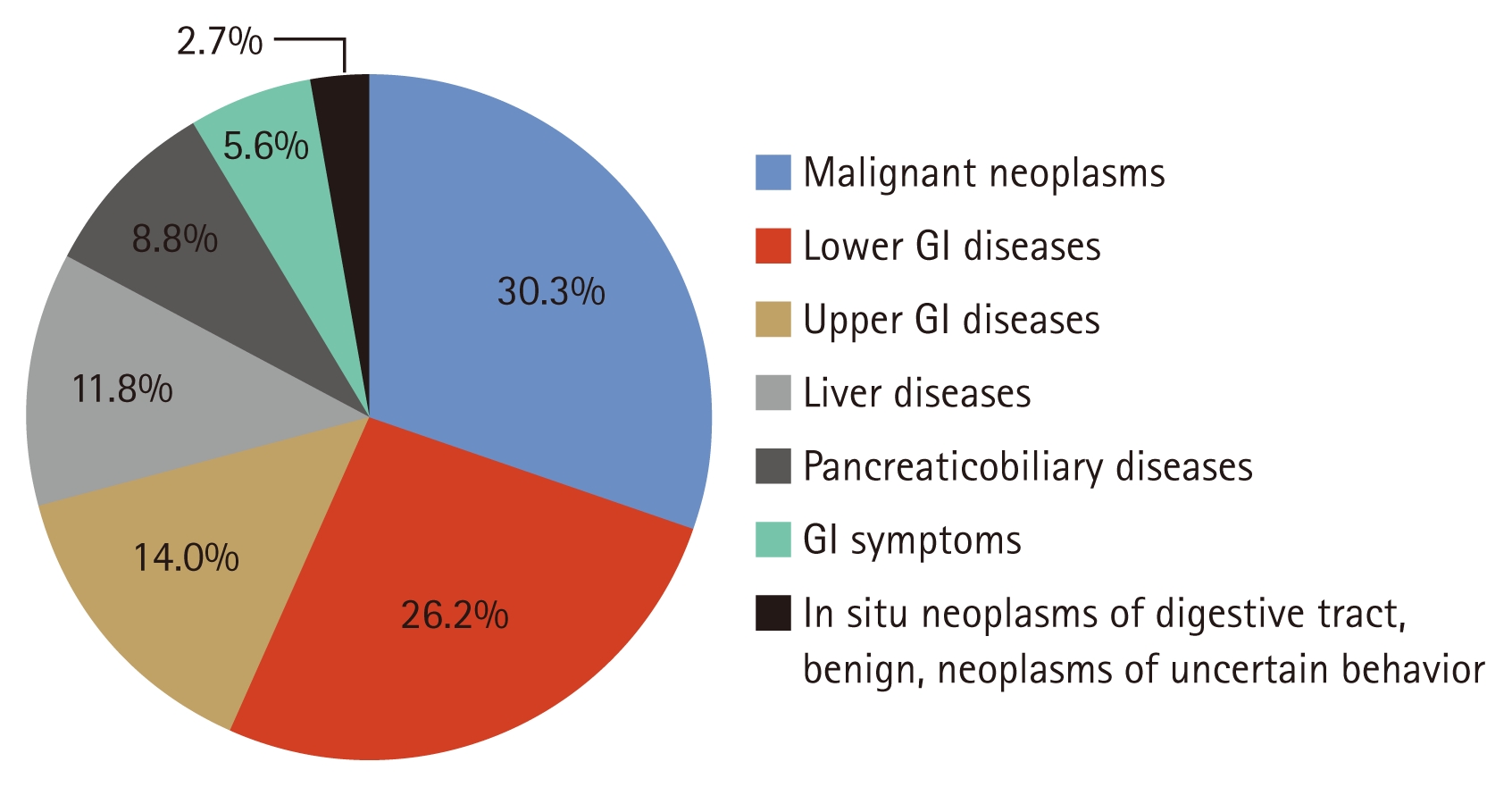
Supplementary Table 1. Digestive diseases were categorized into seven groups: malignant neoplasm, in situ neoplasm of the digestive tract and benign neoplasm of uncertain behavior, upper GI tract disease, lower GI tract disease, liver disease, pancreaticobiliary disease, and GI symptoms. Each group comprised 190 distinct conditions.
Because digestive diseases often occur as primary conditions and common comorbidities of other disorders, we assessed their burden using two criteria. The principal estimate included only cases in which digestive diseases were the primary diagnosis. However, because digestive diseases often present as significant comorbidities, a strict primary diagnosis-based estimate may substantially underestimate the true burden. Conversely, including all secondary diagnoses in the claims data can lead to extreme overestimation due to reimbursement-driven coding practices. Therefore, we defined an extended estimate that includes cases in which digestive diseases are either the primary diagnosis or the first-listed secondary diagnosis. This dual approach was designed to capture clinically significant comorbidities, while preserving diagnostic validity and minimizing overestimation caused by minor or reimbursement-focused coding.
Analysis
The disease burden of digestive diseases in 2020 was estimated based on the number of patients and healthcare costs for each specific condition. Weights from the HIRA-NPS-2020 were applied, and duplicate patient counts were removed to compute the overall burden. Patients were categorized according to sex, age, healthcare provider type, and service type (inpatient or outpatient).
This study focused exclusively on direct medical expenses to assess the burden of digestive diseases. The costs included hospitalizations, outpatient visits, emergency room visits, diagnostic tests, and outpatient prescriptions. We excluded out-of-pocket expenses for noncovered items, pharmacy dispensing fees (billed separately by pharmacies), and oriental medical service expenses. Additionally, dental services related to digestive diseases were included.
The definitions of terms used in this study were as follows:
1) Number of patients: the actual number of patients who received medical treatment within 1 year categorized by disease and health care facility types.
2) Visit (hospitalization) days: the number of days that patients actually visited or were hospitalized at healthcare facilities.
3) Medical expenses: the total cost incurred for healthcare insurance per claim, excluding non-covered expenses. This included the combined amount covered by the insurer (NHIS) and the patient’s out-of-pocket expenses for covered items. However, pharmacy dispensing costs, which were separately billed by pharmacies, were not included. For the extended estimate, the total medical expense of the claim was assigned if digestive disease was the primary or first-listed secondary diagnosis. This is because line-item separation for shared costs (e.g., hospitalization fees) is not feasible in the claims database. All medical expenditures originally calculated in South Korean Won (KRW) were converted to United States Dollars (USD), applying the 2020 average exchange rate of 1,180 KRW per 1 USD.
Use of emergency medical services for the treatment of digestive diseases was estimated based on the number of patients. Because patients were often transferred to outpatient or inpatient care through the emergency department, emergency services were not separately costed but included in the outpatient or inpatient expenses.
Major diagnostic tests and procedures were identified and estimated based on codes from the Health Insurance Fee Schedule. Readmission was defined as subsequent hospitalization within 30 days for the same diagnostic category. Readmission rates were calculated by determining whether patients admitted to hospital between January and November 2020 were readmitted within 30 days of their initial discharge. This method was used because the HIRA-NPS provides annual healthcare utilization data (
Supplementary Table 2).
DISCUSSION
Among the population of South Korea in 2020 [
9], 30.1 million (63.8%) and 18.5 million (39.2%) individuals received medical care for digestive diseases according to the extended and principal estimates, respectively. Korea’s gross domestic product (GDP) in 2020 was $1,744.4 billion, with a total national healthcare expenditure of $73.5 billion (4.2% of GDP) [
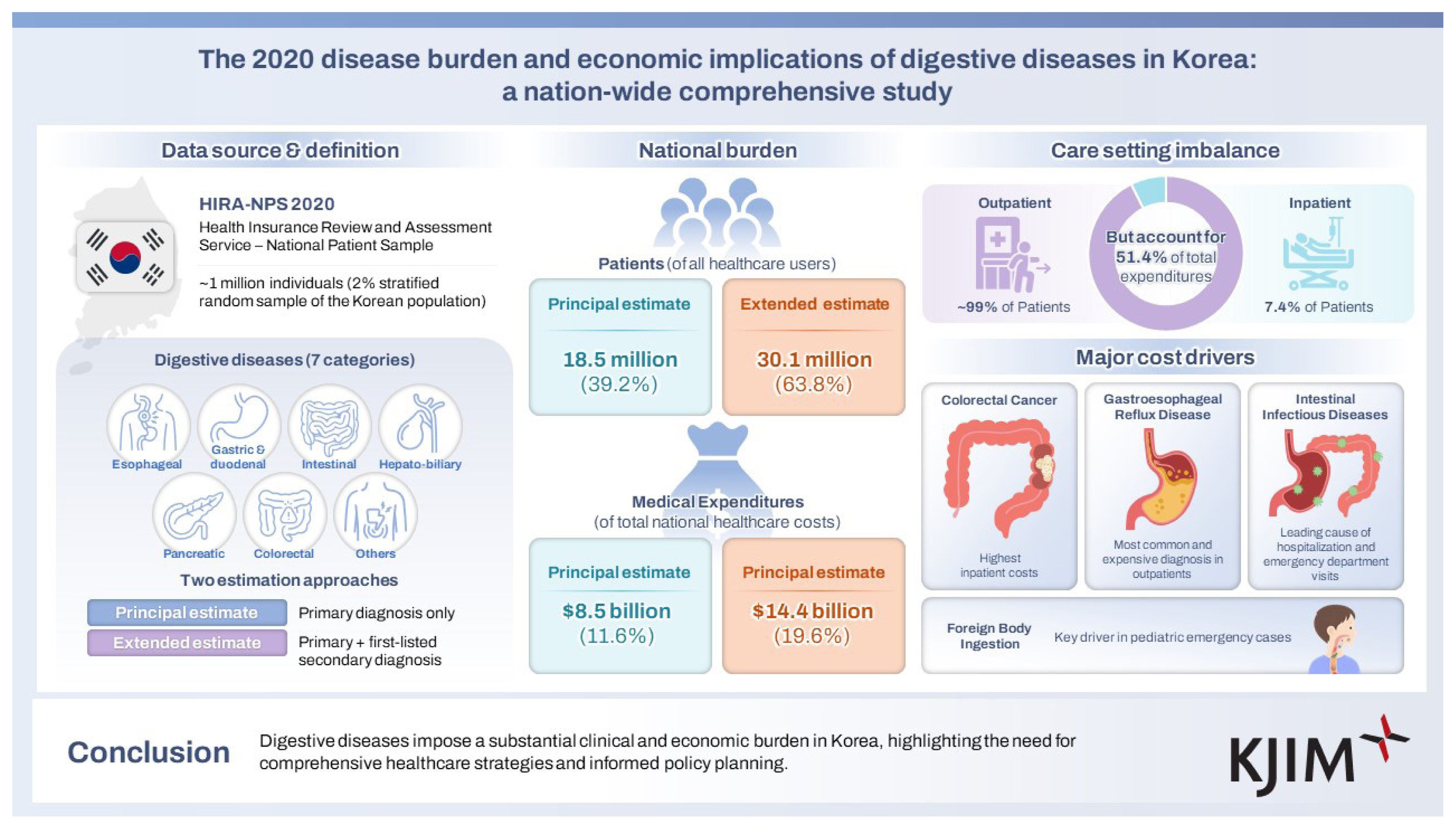
10]. Digestive diseases represented a considerable share of this expenditure, with costs of $8.5 billion under the principal estimate and $14.4 billion under the extended estimate, corresponding to 11.6% and 19.6% of total national healthcare spending, respectively. Notably, 41.0% of the expenditure in the extended estimate was associated with comorbidities rather than the primary diagnosis. Among patients with digestive diseases, 99% received outpatient care and only 7.4% were hospitalized. However, hospitalized patients accounted for 51.4% of the total medical expenditure for digestive diseases. No significant difference in healthcare utilization for digestive diseases was observed between sexes, whereas the highest utilization was observed in middle-aged adults aged 40–65 years.
In 2018, the annual expenditure for digestive diseases in the United States was estimated at a minimum of $119.6 billion, based on data from the Medical Expenditure Panel Survey [
11]. This conservative estimate likely underestimates the true economic burden, as it excluded most GI cancers [
12]. Although direct comparisons are limited by the complexity of the healthcare system of the United States, 3.9 million hospitalizations in that year were associated with GI-related principal diagnoses.
That same year, the estimated aggregate charges (national bill) and actual costs for GI hospitalizations in the United States exceeded $200 billion and $47 billion, respectively [
1]. Although cross-national comparisons are limited by methodological differences, South Korea reported 1.4 million hospitalizations due to digestive diseases, which is approximately one-third of the number observed in the United States. However, the associated treatment cost in Korea was only $4.4 billion, roughly one-tenth of the United States expenditure, highlighting a substantial difference in per-case cost.
Although individuals aged 40–65 years used digestive disease-related healthcare services nearly twice as often as those aged ≥ 65 years, the associated expenditures were comparable. This pattern reflects high per-capita healthcare utilization among middle-aged people and increasing costs for older adults. Notably, South Korea had the highest per-capita healthcare utilization among Organization for Economic Cooperation and Development countries, with an annual average of 16.9 times in 2019 [
11]. This trend is expected to intensify as population aging accelerates.
This study utilized the principal and extended estimates derived from national insurance claims data to assess the burden of digestive diseases. Although principal diagnoses provide greater specificity by focusing on the main cause of medical service use, they may substantially underestimate the disease burden. Given the frequent occurrence of digestive diseases as secondary conditions, we included the first-listed secondary diagnosis to reduce potential underestimation while preserving diagnostic relevance. According to the principal estimate, 39 per 100 individuals utilized healthcare services for digestive diseases, which increased to 64 per 100 when comorbidities were included in the extended estimate. As expected, the extended estimate yielded 1.6 times more patients and incurred 1.7 times higher costs, underscoring the substantial impact of digestive diseases beyond their role as primary diagnoses.
According to the principal estimate, intestinal infectious disease was the most common cause of hospitalization (n = 272,843). In contrast, based on the extended estimate, gastritis/duodenitis was the most frequently diagnosed condition (n = 399,642), with the highest prevalence among all GI diseases. This finding suggests that a substantial number of patients admitted for other conditions had concurrent diagnoses of gastritis/duodenitis. A similar pattern was observed for outpatient care. This trend may be explained by the heterogeneous clinical presentation of gastritis/duodenitis and the variable application of diagnostic criteria across clinical settings. The corresponding diagnostic codes encompass a broad clinical spectrum, ranging from functional dyspepsia to superficial or erosive mucosal changes identified during endoscopy, which are often classified under the same category. In addition, the prophylactic use of acid-suppressive agents, particularly in patients prescribed non-steroidal anti-inflammatory drugs, antiplatelet agents, or anticoagulants, may have contributed to the frequent occurrence of this diagnosis. This is likely an important factor underlying its high prevalence in the claims data.
We applied the principal estimate to maintain mutually exclusive disease categories for inpatient cost comparison. Malignant neoplasms comprised the majority of the top five inpatient cost drivers, underscoring the substantial economic burden of GI cancers on hospitalized patients. Colorectal cancer accounted for the highest inpatient costs, followed by gastric, hepatic, and biliary cancers. In outpatient settings, high expenditures have been observed for common benign diseases, including GERD, chronic hepatitis, colorectal adenomas, gastritis/duodenitis, and abdominal pain. The diseases with the highest emergency room utilization included ileus/obstruction, acute pancreatitis, pancreatic cancer, and biliary cancer, suggesting that acute abdominal pain was a major driver of emergency department visits. Foreign body ingestion has been identified as a leading cause of emergency room visit among pediatric patients compared to adult patients.
A major strength of this study is its use of a nationally representative dataset. Even in the United States, where the health insurance system is complex and fragmented, efforts have been made to establish and utilize a nationwide health information network [
1,
12,
13]. By contrast, South Korea operates a single-payer NHI system that provides universal population coverage. The claims database used in this study covers approximately 96% of the Korean population, thus ensuring high external validity [
14]. Furthermore, it includes data from a wide range of healthcare institutions, including primary, secondary, and tertiary medical facilities, as well as nursing facilities, thereby reflecting real-world service utilization [
15,
16].
In addition, our findings reflect a significant temporal shift compared with previous national data. A 2011 study by Jung et al. [
5] estimated that approximately 20 million Koreans used medical services for digestive diseases. In contrast, our extended estimate for 2020 shows a substantial increase to 30.1 million individuals, accompanied by a corresponding surge in total healthcare expenditures. This upward trajectory over the past decade is likely driven by South Korea’s rapidly aging population, leading to an increase in age-related chronic digestive disorders and an expanding pool of patients diagnosed through the national cancer screening program. This persistent and growing burden highlights the importance of periodically updating national healthcare utilization statistics to effectively guide resource allocation.
However, this study had several limitations. First, the HIRA-NPS dataset was based on a stratified sample, which may limit its generalizability in estimating the nationwide burden of disease in Korea. However, previous studies have demonstrated that analyses using weighted HIRA-NPS data produce estimates of medical utilization and expenditure that closely align with national statistics for common conditions [
17]. In particular, the reliability and stability of the estimates improved with high numbers of patients and service claims. Conversely, the representativeness may be limited for rare diseases with low claim frequencies. Second, the dataset includes only insurance-covered services and excludes out-of-pocket expenditures for non-covered care. Therefore, the overall burden of disease and diagnostic test utilization, especially for endoscopic procedures, may have been underestimated. South Korea has a high incidence of gastric cancer and operates a national cancer screening program for individuals aged ≥ 40 years. However, the results of these screenings were managed separately from those of the NHIS database used in this study. Additionally, screening procedures performed through private of employer-sponsored health checkups were excluded, further contributing to an underestimation of the total number of esophagogastroduodenoscopies, colonoscopies, abdominal ultrasonography, and CT scans performed for screening purposes. Third, the accuracy of disease coding within the ICD-10 system may have affected diagnostic validity. As the HIRA database is based on a fee-for-service insurance structure, diagnosis codes are primarily assigned for reimbursement instead of clinical classification. Previous studies reported a concordance rate of approximately 70% for primary diagnoses, 53.6% for secondary diagnoses, and slightly higher rates for inpatient data (75.9%) and malignant neoplasms (77.3%) [
16,
18]. Fourth, the study period (2020) coincided with the onset of the COVID-19 pandemic, which profoundly impacted healthcare access and utilization behaviors. Elective procedures (such as screening endoscopies and non-urgent surgeries) and outpatient visits for mild symptoms were likely reduced during this period due to social distancing measures and patients’ fear of infection. Consequently, the disease burden and economic costs reported in this study may be underestimated compared to pre-pandemic years. Nevertheless, despite the potential contraction in medical utilization, digestive diseases still accounted for a significant proportion of the national healthcare burden, highlighting their ongoing clinical and economic significance. Fifth, because the extended estimate only included the record first secondary diagnosis, digestive diseases that were recorded as lower-priority comorbidities beyond this position may not have been captured. This could potentially lead to an underestimation of the true comorbidity-related burden. Therefore, we present both principal and extended estimates to capture the plausible range of disease burden under different case definitions. Sixth, because isolating line-item costs is unfeasible, the extended estimate attributes the entire claim cost to the digestive disease. This may result in an overestimation of the economic burden when non-GI primary conditions are the main cost driver. Nevertheless, our dual-estimate approach mitigates this issue by providing a conservative lower bound alongside the broader healthcare footprint.
Despite these limitations, this study provided a comprehensive and nationally representative assessment of the healthcare burden associated with digestive diseases in Korea. The application of principal and extended estimations allowed for a more accurate reflection of the real-world clinical and economic impacts of digestive diseases at the national level.
In conclusions, digestive diseases are highly prevalent in Korea, accounting for approximately four in 10 healthcare visits, based on the principal diagnoses, and up to six in 10 patients when comorbidities were included. The corresponding healthcare expenditures, $8.5–14.4 billion, represents a major economic burden on the national healthcare system. Their frequent presentation as both primary and secondary diagnoses significantly increases healthcare utilization and associated costs.
Given the rapidly aging population of Korea, the demand for digestive disease related to digestive diseases is expected to increase. These findings underscore the urgent need for proactive healthcare strategies, targeted resource allocation, and informed policy planning to effectively manage the increasing clinical and economic burden of digestive diseases.







 PDF Links
 PubReader
 ePub Link
 XML Download
 Full text via DOI
 Download Citation
 Supplement table 1
 Print
Print