


INTRODUCTION
Biologic agents, particularly tumor necrosis factor inhibitor (TNFi), have considerably improved the management of axial spondyloarthritis (SpA) through rapid relief of symptoms, inflammation reduction, and improved physical function [1,2]. These therapies have become a cornerstone in the treatment of axial SpA, with their use steadily increasing over the past two decades. With increasing access to TNFi treatment, substantial improvements have been observed in physical function and overall quality of life [3,4].
Recently, existing biologics and newly approved agents have become available for the treatment of axial SpA, offering improved therapeutic options. The availability of diverse agents has provided a more individualized approach to treatment. Owing to the heterogeneous clinical presentations of axial SpA—including varying degrees of disease severity and extra-musculoskeletal manifestations—personalized treatment strategies are increasingly necessary [5,6]. Furthermore, earlier diagnosis and timely initiation of appropriate biologic therapies may contribute to better treatment outcomes [7,8]. These evolving clinical demands highlight the need for rheumatologists to develop expertise in the prescription of biologic agents.
Prescribing decisions may differ across medical specialties depending on clinical experience, familiarity with biologics, and disease-specific training. Such variations can affect drug selection and treatment outcomes, including adherence and long-term persistence. Several studies have shown that specialist care may be associated with better outcomes; however, methodological limitations—such as selection bias and inadequate adjustment for confounding factors—have made it difficult to draw definitive conclusions [9,10]. In reality, studies on the evaluation of treatment outcomes are often influenced by multiple biases beyond the intervention itself. Moreover, directly comparing the effectiveness of specialist versus non-specialist care is challenging; nevertheless, we sought to explore differences in drug retention rates of TNFi across specialties. Drug retention is influenced by various factors, including patient characteristics, physician decisions, healthcare costs, and insurance systems; nonetheless, it can still provide meaningful insights into treatment patterns.
In this study, we aimed to compare TNFi prescribing patterns and drug retention rates in the management of radiographic axial SpA across medical specialties. Using nationwide health insurance claims data, we sought to investigate whether differences exist in biologic prescribing behavior and treatment persistence according to departmental classification.
METHODS
Patients
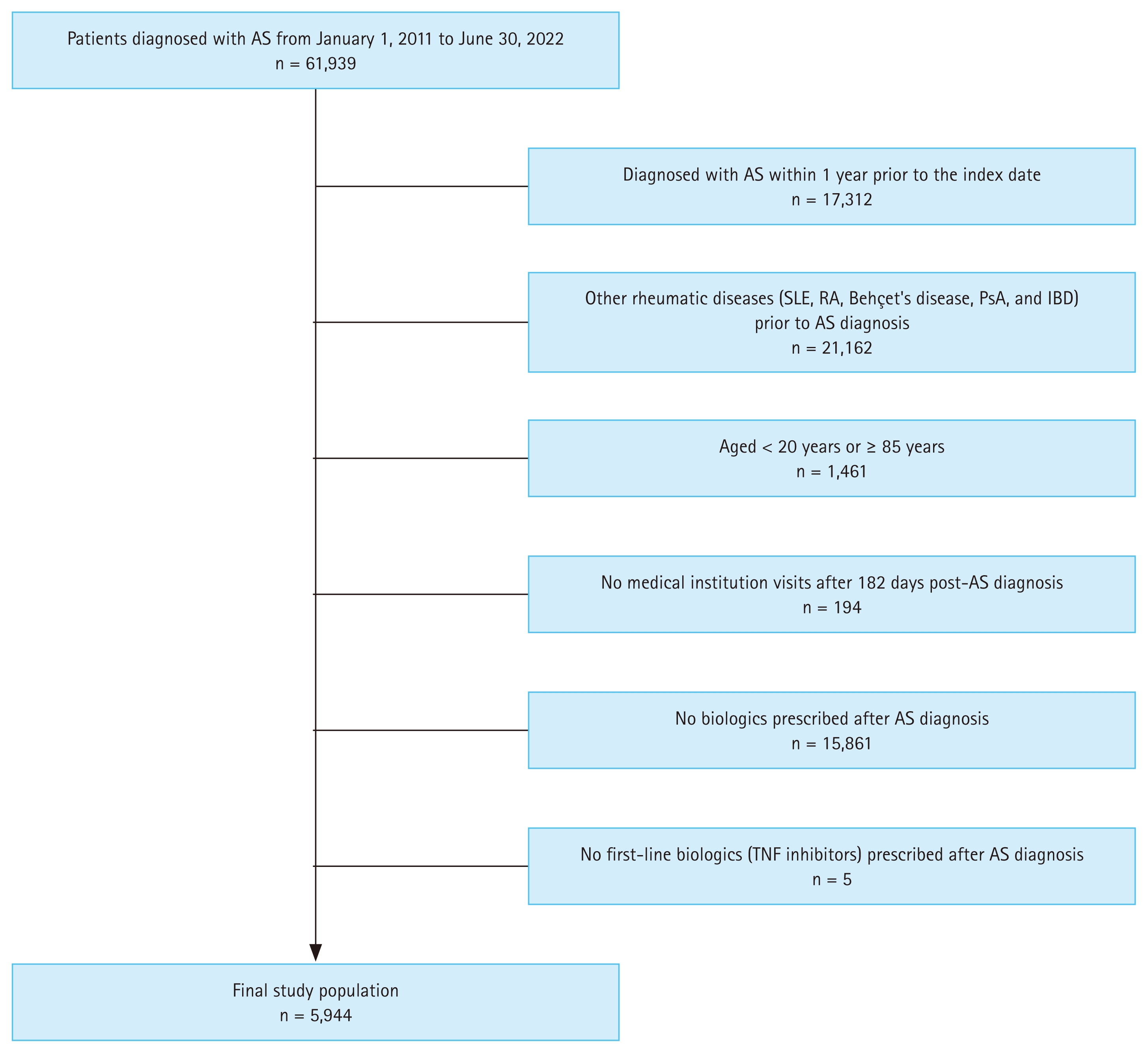
Data of patients diagnosed with ankylosing spondylitis (AS) between January 1, 2011, and June 30, 2022, were obtained from the Health Insurance Review and Assessment Service (HIRA) derived from the national health insurance system, which covers the entire Korean population and provides access to claims-based data. Patients diagnosed with AS in the HIRA data were identified using the modified New York criteria [11]. The following patients were excluded: those diagnosed with AS before the index date, those younger than 20 years, patients who did not visit the hospital for 182 days following the AS diagnosis, patients who were not prescribed biological agents after the AS diagnosis, and those who did not receive a TNFi as the first biological agent (Fig. 1, Supplementary Table 1, 2).
Data collection
Basic patient information—including age, sex, diagnosis period, and the presence of diabetes, hypertension, hyperlipidemia, ischemic heart disease, stroke, comorbidities, chronic obstructive pulmonary disease, and asthma—was collected in 10-year increments. Additionally, data on TNFi use, as well as information on the prescribing departments (internal medicine, orthopedics, neurosurgery, and others) and hospitals (tertiary hospitals, general hospitals, hospitals, clinics, and others), were also included.
Statistical analysis
Baseline characteristics were extracted from the HIRA database. Age was categorized into intervals following the privacy policy outlines in the HIRA. All variables are expressed as number (%), and statistical significance was set at p < 0.05. Participants were further stratified by the type of the first biological agent they received. Kaplan–Meier survival curves were generated to compare the retention rates by TNFis and departments. Factors associated with the retention rate were identified using Cox proportional hazards models. Sensitivity analyses were conducted using a 91-day discontinuation criterion, in addition to the primary 182-day criterion. Statistical analyses were performed using SAS Enterprise Guide (version 6.1; SAS Institute, Inc., Cary, NC, USA) and R (version 3.5.2; R Foundation for Statistical Computing, Vienna, Austria). Additional graphs were produced using Microsoft Excel.
Ethics approval
This study was reviewed by the Inje University Ilsan Paik Hospital Institutional Review Board (ISPAIK 2023-11-003- 001) in accordance with the ethical principles of the Helsinki Declaration. All patient information was anonymized, and the processed data were provided by the Health Insurance Review & Assessment Service. Consequently, informed consent was not required.
RESULTS
Baseline characteristics
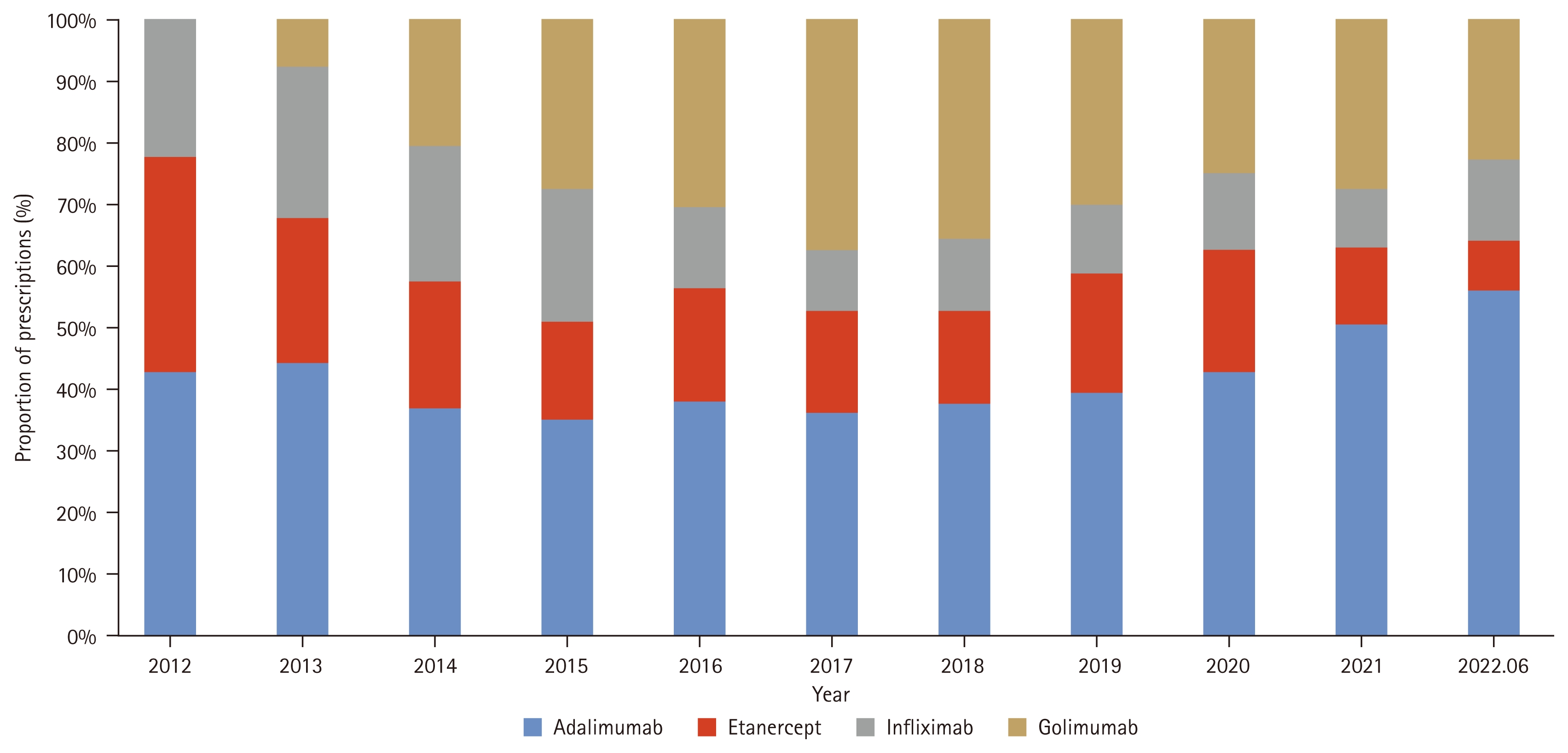
Table 1 presents the baseline characteristics of patients with radiographic axial SpA treated with a first-line biologic. More than half of the patients (56.5%) were under 39 years of age, and the majority were male (79.3%). In addition, over half of these patients (53.3%) received treatment at tertiary hospitals. Approximately 74.8% of patients were treated in the internal medicine department, with smaller proportions treated in orthopedic (17.4%) and neurosurgery (5.2%) departments. The most frequently selected first-line biological agent was adalimumab, followed by golimumab, etanercept, and infliximab. Figure 2 shows the trends in TNFi prescriptions between January 2012 and June 2022. Golimumab use increased rapidly but showed a gradual decline over time. Most recently, adalimumab has become the most commonly prescribed biologic agent.
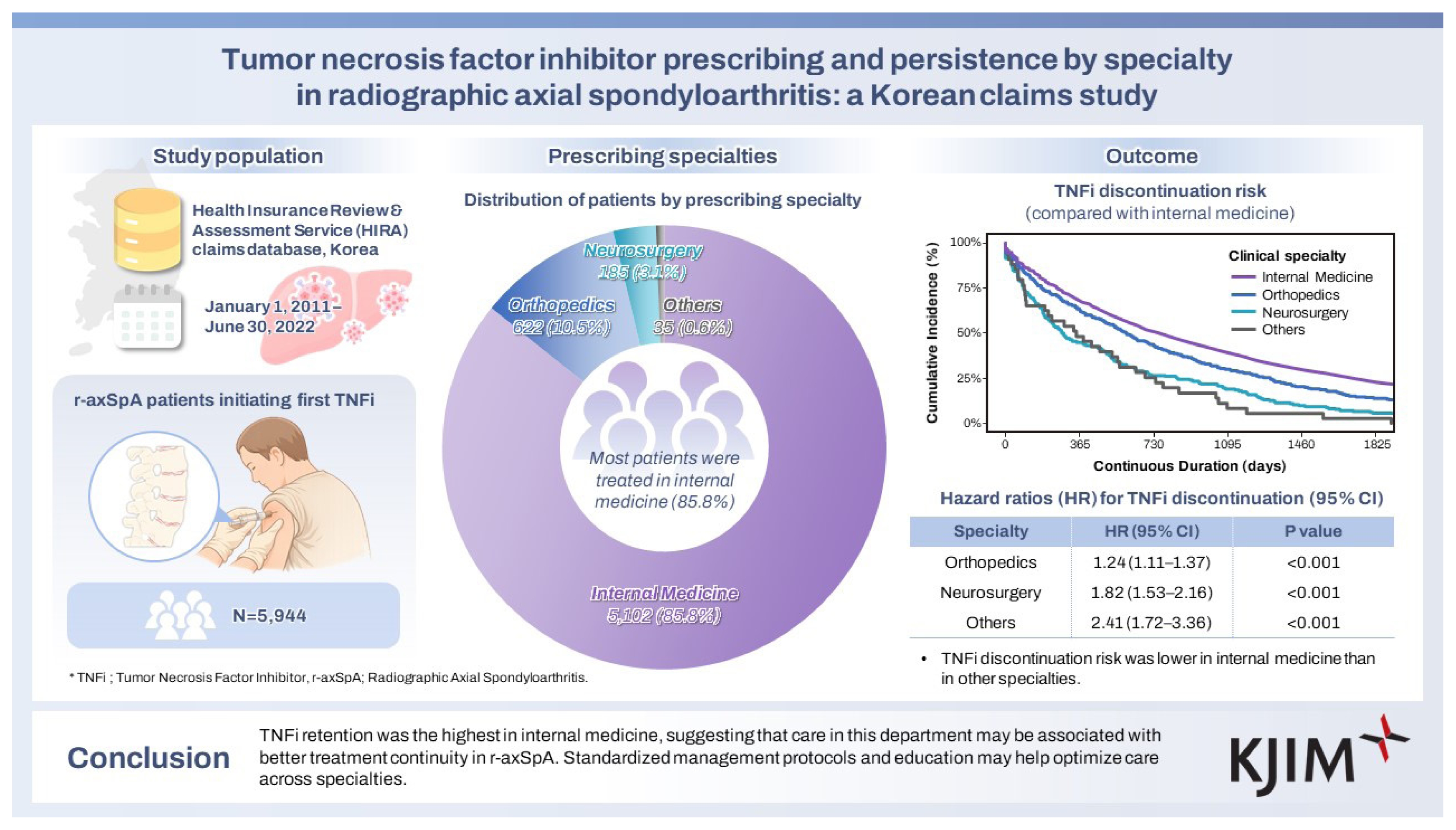
Table 2 presents the treatment patterns of patients who received their first biologic agent. More than 60% of patients receiving adalimumab, etanercept, or infliximab were prescribed these drugs at tertiary hospitals, with over 90% receiving them from internal medicine departments. In contrast, only 39.2% of golimumab prescriptions were from tertiary hospitals, of which 51.8%, 35.4%, and 11.8% were prescribed by the internal medicine, orthopedic surgery, and neurosurgery departments, respectively. Approximately 11% of patients initially diagnosed by a non-internal medicine specialist went on to receive TNFi treatment in the internal medicine department. Specifically, 17.4% of patients were diagnosed in the orthopedic surgery department; nevertheless, only 10.5% remained under orthopedic care for TNFi; similarly, 5.2% were diagnosed in the neurosurgery department, but just 3.1% received TNFi within this department. The majority of these transitioned patients were treated with golimumab.
TNFi prescription patterns across medical specialties
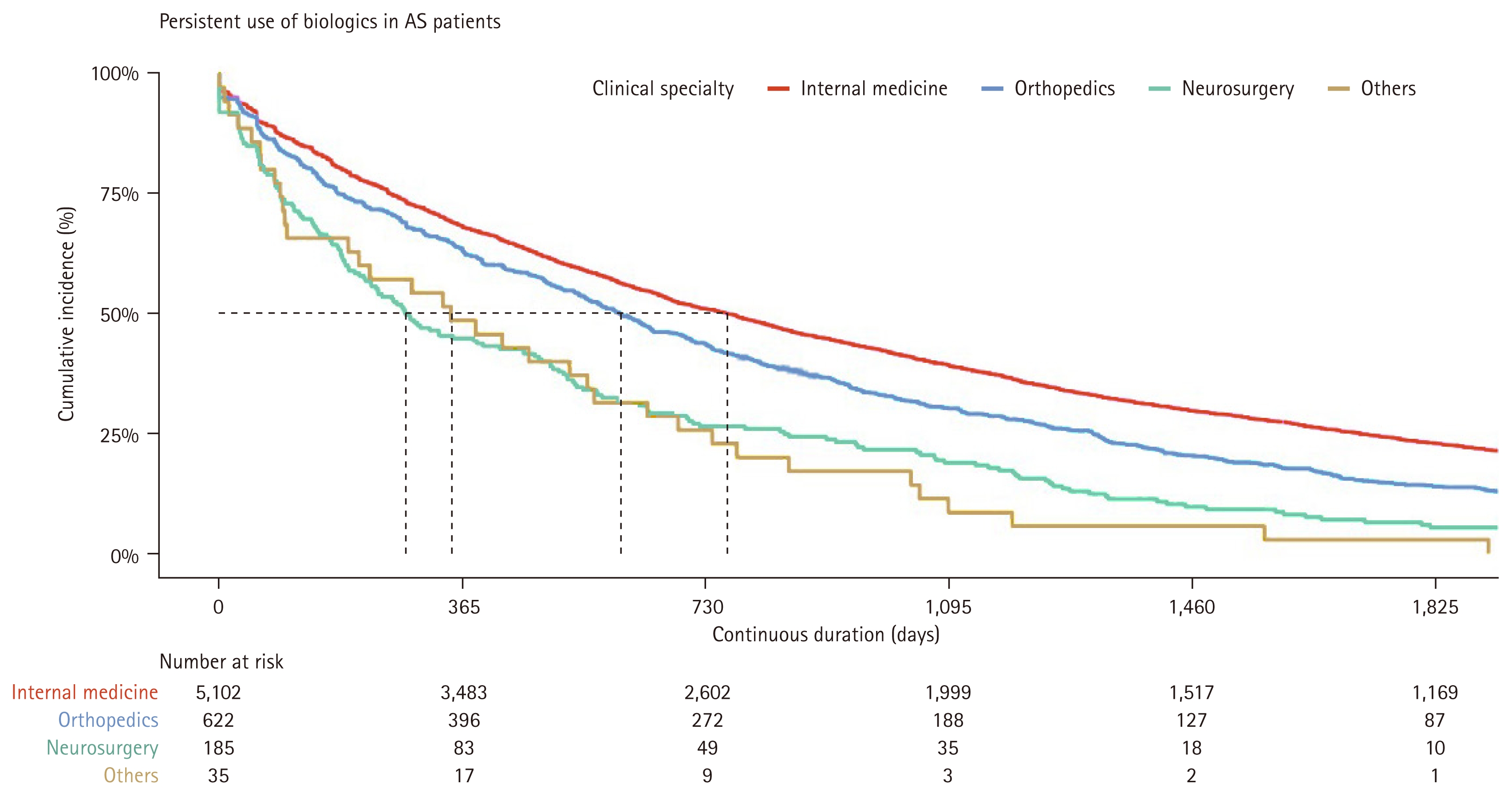
Figure 3 presents the Kaplan–Meier curves illustrating TNFi drug retention based on clinical specialty. The highest retention was observed in internal medicine, followed by orthopedic surgery, neurosurgery, and other specialties. Supplementary Figure 1 shows the drug retention curves of adalimumab, etanercept, infliximab, and golimumab based on clinical specialty. Supplementary Table 3 presents the median time (in days) to 50% discontinuation for each TNFi by clinical specialty. Direct comparison is limited owing to differences in the number of TNFi prescriptions preferred by each specialty; nevertheless, golimumab showed a notable gap in discontinuation time between departments: the median time to 50% discontinuation was 971.0 days [851–1,140] in internal medicine compared with 592.5 days [534–651] in orthopedic surgery, demonstrating a difference greater than 1 year.
Table 3 shows the results of multivariable analyses examining factors associated with TNFi discontinuation. In the first multivariable analysis, orthopedic surgery (hazard ratio [HR] 1.24, 95% confidence interval [CI] 1.11–1.37), neurosurgery (HR 1.82, 95% CI 1.53–2.16), and other departments (HR 2.41, 95% CI 1.72–3.36) showed significantly higher HRs for discontinuation than those of internal medicine. Compared with golimumab, infliximab was associated with a significantly lower HR (HR 0.88, 95% CI 0.80–0.97), whereas adalimumab was associated with a higher HR for discontinuation (HR 1.11, 95% CI 1.03–1.19). In addition, female sex (HR 1.11, 95% CI 1.04–1.18), older age (HR 1.21, 95% CI 1.10–1.33), treatment at non-tertiary hospitals (general hospital: HR 1.23, 95% CI 1.16–1.30, hospital: HR 1.21, 95% CI 1.08–1.35, clinic: HR 1.24, 95% CI 1.01–1.51), and the presence of dyslipidemia (HR 1.12, 95% CI 1.06–1.19) were associated with higher HRs for discontinuation. The second multivariable analysis yielded similar results.
Stratified analysis of TNFi drug retention by internal medicine and non-internal medicine departments
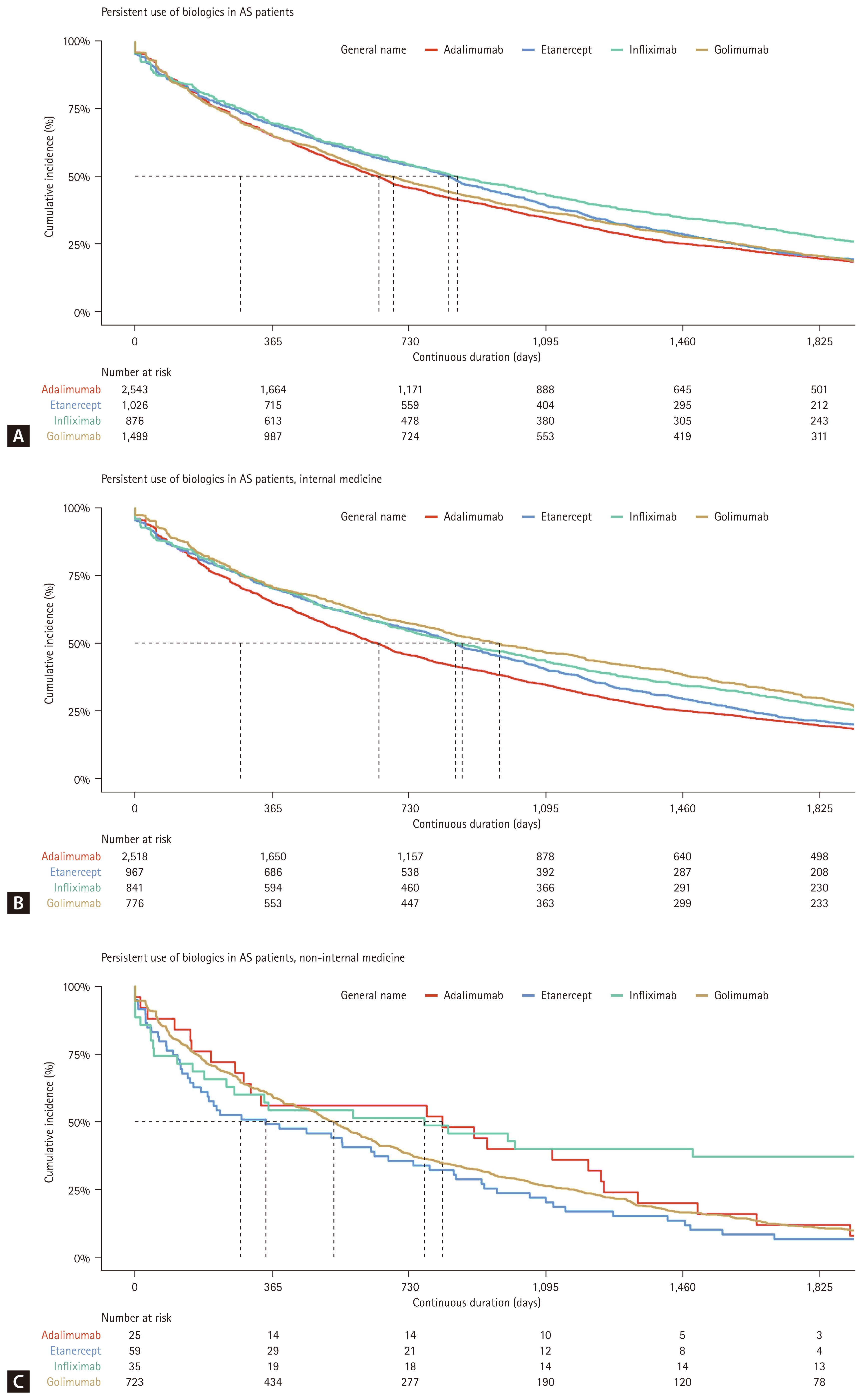
Figure 4 presents the Kaplan–Meier curves illustrating TNFi drug retention based on the agent used, stratified by all departments, including internal medicine, and non-internal medicine specialties. In the overall cohort, the median time to 50% discontinuation was longest for infliximab, followed by etanercept, golimumab, and adalimumab. However, golimumab showed the longest median retention, followed by infliximab, etanercept, and adalimumab, within internal medicine. The retention of golimumab considerably varied across specialties, with the shortest retention observed outside internal medicine. In non-internal medicine specialties, adalimumab showed the longest median time to 50% discontinuation.
Sensitivity analysis
A sensitivity analysis was conducted using a 91-day threshold for TNFi discontinuation to assess the robustness of the primary findings. Supplementary Figure 2 shows the TNFi drug retention based on clinical specialty (A) and the agent used (B), demonstrating patterns consistent with the main analysis. In Supplementary Table 4, multivariable analysis results remained largely consistent: non-internal medicine specialties were associated with a significantly higher hazard of discontinuation compared with internal medicine (HR 1.15, 95% CI 1.04–1.27); meanwhile, no significant difference was observed for orthopedic surgery (HR 1.05, 95% CI 0.95–1.17). Etanercept showed a significantly higher HR than that of golimumab (HR 1.10, 95% CI 1.01–1.20), whereas female sex and older age were not significantly associated with discontinuation. These findings support the robustness of the primary results.
DISCUSSION
In this study, the prescribing patterns and drug retention rates of TNFi were compared across different medical specialties. Most TNFi prescriptions were issued in the internal medicine department; however, golimumab was an exception, with approximately half of its prescriptions originating from other specialties, most notably orthopedic surgery. TNFi retention was the highest in the internal medicine department, and retention patterns varied by drug and by specialty. These findings suggest that departmental patterns of care may be associated with TNFi treatment persistence in patients with axial SpA. In the Korean healthcare setting, these findings may have implications for specialist referral pathways, broader dissemination of treatment guidelines across specialties, and healthcare policies aimed at improving access to appropriate long-term management for patients with axial SpA.
Because claims data do not include key clinical indicators such as disease activity scores, inflammatory markers, or imaging findings, differences in baseline disease severity across specialties could not be fully considered. Therefore, drug retention should be interpreted as a proxy outcome influenced by multiple clinical and non-clinical factors rather than a direct measure of treatment efficacy or safety. However, drug retention is a useful real-world outcome that may reflect multiple aspects of treatment, including effectiveness, tolerability, and healthcare delivery, and can complement evidence from randomized controlled trials [12,13]. We compared drug persistence across departments to explore whether departmental patterns of care were associated with treatment persistence rather than directly comparing clinical outcomes. In our study, the median time to 50% drug retention was 971.0 days in internal medicine compared with 592.5 days in orthopedic surgery, and the HRs for discontinuation were significantly higher in orthopedic surgery (HR 1.24) and neurosurgery (HR 1.84) than in internal medicine. These findings suggest that treatment in the internal medicine department may be associated with better long-term treatment persistence in patients with axial SpA. Possible explanations for the observed differences in TNFi persistence across specialties include variation in familiarity with SpA management, biologic monitoring practices, recognition and management of adverse events, and referral or follow-up patterns within multidisciplinary care. However, these factors could not be directly assessed in the claims database and should therefore be interpreted as potential contributors rather than confirmed mechanisms.
In the management of axial SpA, structured educational programs and guidelines have been developed to support the appropriate use of biologic agents [14–18]. The emergence of various biologics with different modes of action, as well as newer therapies such as Janus kinase (JAK) inhibitors, underscores the need for continuous education and research among rheumatologists. Moreover, axial SpA is characterized by diverse extra-musculoskeletal manifestations. Hence, selecting personalized and appropriate treatments is more critical [19,20]. In addition to accurate diagnosis and proper drug selection, the continued management of patients receiving biologics requires consideration of multiple factors, including disease activity monitoring, adverse events, development or recurrence of extra-musculoskeletal manifestations, patient compliance, and cost-effectiveness. The guidelines recommend that rheumatologists encourage interdisciplinary collaboration with all relevant specialties, supported by targeted education and incentives, to ensure comprehensive, patient-centered axial SpA care [21–23].
In this study, among patients who received a first-line biologic, 25.2% were diagnosed with radiographic axial SpA by non-internal medicine departments and 17.4% by orthopedic surgery. Approximately 11% of patients appear to have transitioned from non-internal medicine to internal medicine for biologic therapy, whether through interdisciplinary consultation, referral, or the patient’s own decision. Notably, golimumab showed a significantly higher proportion of prescriptions from non-internal medicine departments and in hospital-level institutions, rather than tertiary care centers or general hospitals. This pattern raises the possibility of channeling bias. Therefore, the observed specialty-specific differences in golimumab retention should be interpreted with caution. Such differences may reflect prescribing preferences, institutional practice patterns, or patient selection rather than intrinsic differences in drug performance or management quality alone. Although the reasons for this distribution cannot be fully determined from claims data, differences in the healthcare setting and prescribing context under the Korean national health insurance system may have contributed to these patterns.
Additionally, differences in reimbursement structure and prescribing environment under the Korean national health insurance system may have contributed to these patterns. Notably, from a policy perspective, reimbursement structures may need to better reflect the complexity and long-term management needs of chronic diseases such as axial SpA. If such structural issues persist, there may be a risk of increased variation in biologic use across specialties, with possible implications for healthcare costs and continuity of care. Under the Korean national health insurance system, low reimbursement rates may influence prescribing behavior and care delivery in ways that warrant further attention [24,25].
Health insurance claims data offer the advantage of large-scale analysis, and in Korea, where data from the entire population is available, valuable insights into healthcare trends can be provided, and policy decisions may be informed. However, without proper stratified analysis or the use of well-defined inclusion and exclusion criteria, such studies risk producing misleading conclusions [26,27]. In our study, retention rates for golimumab markedly differed when comparing all specialties versus internal medicine alone, underscoring how aggregation can obscure important specialty-specific patterns. Therefore, caution is warranted when interpreting drug retention rates, particularly when comparing different biologic agents or treatment strategies. To minimize these limitations, we recommend applying rigorous eligibility criteria and collaborating with experienced researchers during study design and interpretation.
We also identified several additional findings of interest. Compared with those in tertiary hospitals, patients treated at general hospitals and smaller institutions faced a significantly higher risk of TNFi discontinuation, underscoring the need for enhanced education of healthcare providers on biologic agents and axial SpA management [3,28]. Dyslipidemia was likewise associated with a higher risk of discontinuation, highlighting that cardiovascular care is important in patients with axial SpA [29]. In contrast, asthma was linked to a lower risk of discontinuation, a relationship that warrants further in-depth investigation.
This study has some limitations. First, we analyzed data from only the first TNFi prescribed to each patient. Evaluating second- or third-line biologics would require a more complex study design, with confounding factors becoming difficult to control. Moreover, under the Korean national health insurance system, subsequent therapies can include agents with different modes of action, such as secukinumab or JAK inhibitors, making uniform comparisons challenging. Additionally, transitions between specialties during treatment were not separately analyzed, because such changes may occur for diverse clinical and non-clinical reasons that cannot be determined from claims data alone (e.g., disease worsening, patient preference, referral patterns, or institutional factors). Such analyses would also require consideration of bidirectional movement across specialties to ensure fair interpretation. Second, when obtaining data from the HIRA service, departments could only be broadly classified as internal medicine, and rheumatology could not be identified separately. Accordingly, although internal medicine-based care in this setting may often reflect rheumatology-led management, our findings should be interpreted according to departmental classification and with caution. Third, the focus was on drug retention as an outcome. Differences in retention rates among TNFi do not necessarily indicate differences in efficacy, safety, or cost. Such distinctions would need to be clarified through clinical studies specifically designed to compare these aspects. Future prospective studies incorporating detailed clinical assessments, including disease activity measures and reasons for drug discontinuation, will be needed to better clarify the relationship between specialty of care and long-term treatment persistence. Finally, factors such as treatment accessibility and cost are also important determinants of drug retention. However, because of the limitations of the HIRA database, we were unable to analyze variables related to healthcare costs or regional accessibility.
In conclusion, we examined drug retention rates across medical specialties in the treatment of radiographic axial SpA. TNFi retention was the highest in the internal medicine department, suggesting that departmental patterns of care may be associated with treatment persistence. These findings support the need for continuous education, standardized management approaches, and appropriate guideline dissemination across specialties to promote optimal multidisciplinary care.
KEY MESSAGE
1. In a nationwide Korean claims cohort (2011–2022), TNFi retention in radiographic axial SpA was higher in internal medicine than in other specialties.
2. Non-internal medicine specialties showed a significantly higher risk of TNFi discontinuation than internal medicine, suggesting gaps in long-term treatment continuity across departments.
3. Standardized guideline-based care and physician education are needed to improve TNFi persistence across specialties.


 PDF Links
 PubReader
 ePub Link
 XML Download
 Full text via DOI
 Download Citation
 Supplement figure 1
 Print
Print