


INTRODUCTION
Breast cancer is the most commonly diagnosed cancer worldwide, and human epidermal growth factor receptor 2 (HER2)-positive breast cancer constitutes about 15–20% of all breast cancers and is typically associated with aggressive behavior and poor prognosis, making targeted therapy a cornerstone of its treatment [1–3]. Trastuzumab, a HER2 monoclonal antibody used in HER2-targeted therapy, improves outcomes for patients with HER2-positive breast cancer and is administered either after chemotherapy or in combination with chemotherapy following surgery [4–7].
However, the role of adjuvant chemotherapy and anti-HER2 targeted therapy in early HER2-positive breast cancer with T1a or T1b N0 tumors remains unclear. The National Comprehensive Cancer Network guidelines recommend considering adjuvant chemotherapy and trastuzumab for T1a/b N0 HER2-positive breast cancer [8]. However, these recommendations are primarily based on non-randomized retrospective studies, and randomized clinical trials or level 1 evidence supporting this approach is lacking. The adjuvant paclitaxel and trastuzumab (APT) regimen has demonstrated excellent disease-free survival (DFS) outcomes and has become the standard adjuvant treatment for patients with small node-negative HER2-positive breast cancer [9]. However, the evidence comes from a single-arm trial without randomized controlled data, and information on patients who did not receive anti-HER2 therapy remains scarce and outdated. Several retrospective studies have investigated the impact of adjuvant chemotherapy and anti-HER2 therapy in patients with T1a/T1b N0 HER2-positive breast cancer; however, the results remain controversial [7,10–12], highlighting the lack of clear evidence regarding the necessity and efficacy of adjuvant chemotherapy and anti-HER2 targeted therapy in T1a/T1b N0 HER2-positive early breast cancer. Therefore, further studies are needed to reevaluate the role of adjuvant therapy and establish optimal treatment strategies. In Korea, trastuzumab is not reimbursed for tumors smaller than 1 cm, providing a unique real-world setting to evaluate the impact of anti-HER2 therapy for this patient population.
METHODS
Patients and data collection
This study included patients with HER2-positive T1a/b N0 early breast cancer who underwent surgery at Seoul National University Bundang Hospital between January 1, 2004 and December 31, 2021. The study focused on patients aged 20 years or older. Through a review of medical records, we collected data on baseline characteristics, pathological reports, information on post-surgical adjuvant chemotherapy and anti-HER2 therapy, disease progression and progression dates, as well as mortality status and dates of death. Details of the chemotherapy regimens and administered cycles are provided in Supplementary Table 1.
Definitions and evaluations
The tumor, lymph node, metastasis staging system from the 8th Edition of the American Joint Committee on Cancer Cancer Staging Manual was used to determine the stage of breast cancer [13]. Tumors with a greatest dimension > 1 mm and ≤ 5 mm were classified as T1a, whereas those with a greatest dimension > 5 mm and ≤ 10 mm were classified as T1b. HER2 positivity was defined as immunohistochemistry (IHC) 3+ or IHC 2+ with in situ hybridization positivity, in accordance with the American Society of Clinical Oncology-College of American Pathologists guideline [14]. Hormone receptor positivity was defined as estrogen receptor and/or progesterone receptor positivity according to the institutional pathology reports, in line with the American Society of Clinical Oncology College of American Pathologists guideline recommendations [15]. p53 status was obtained from pathology reports and categorized as positive or negative according to the immunohistochemical interpretation documented in the pathology record. Additional clinicopathologic variables, including axillary node management, lymphatic invasion, and venous invasion, were extracted from operative and pathology reports.
Invasive breast cancer-free survival (IBCFS) and invasive disease-free survival (IDFS) based on the standardized definitions for efficacy end points in adjuvant breast cancer clinical trials were used as indicators to evaluate recurrence [16]. IBCFS is defined as the time from the date of surgery to the occurrence of an IBCFS event, including invasive breast tumor recurrence in the ipsilateral or contralateral breast, distant recurrence, or death specifically due to breast cancer. Non-invasive conditions, such as ductal carcinoma in situ, and deaths unrelated to breast cancer are not considered IBCFS events. IDFS is defined as the time from the date of surgery to the occurrence of an IDFS event, including invasive breast tumor recurrence, distant recurrence, death from any cause, or secondary cancer. Overall survival (OS) was defined as the time from the date of surgery to the date of death or the last follow-up.
The classification and grading of adverse events were based on the Common Terminology Criteria for Adverse Events version 5.0 [17]. For patients who received anti-HER2 therapy, cardiac function was assessed using echocardiography before treatment initiation and subsequently monitored at approximately 2-month intervals during adjuvant treatment.
Statistical analysis
Continuous variables between the two groups were compared using Student’s t-test, whereas categorical variables were compared using the chi-square test. Survival analyses for IBCFS, IDFS, and OS were performed using the Kaplan–Meier method, and differences between groups were assessed using the log-rank test. The reverse Kaplan–Meier method was used to calculate the follow-up duration. Univariable and multivariable analyses for IBCFS and IDFS were conducted using Cox proportional hazards models. All statistical tests were two-sided, and statistical significance was defined as p < 0.05. All data were analyzed using R (version 4.4.2; The R Foundation for Statistical Computing) [18].
Ethics
This study was conducted in accordance with the Declaration of Helsinki and was approved by the Institutional Review Board of Seoul National University Bundang Hospital (IRB No. B-2401-876-103). All authors had full access to the study data and reviewed and approved the final manuscript. The requirement for informed consent was waived by the IRB because this retrospective medical record review involved no intervention and posed minimal risk to the participants.
RESULTS
Patient characteristics
A total of 165 patients were retrospectively enrolled (Table 1). The median age at diagnosis was 52.0 years (range, 30–81 yr), and the median follow-up duration was 98.4 months (95% confidence interval [CI], 87.5–108.4 mo; range, 25.8–238.5 mo).
Among these patients, 85 (51.5%) had T1a tumors and 80 (48.5%) had T1b tumors. Breast-conserving surgery was performed in 70 patients (42.4%), whereas 95 (57.6%) underwent mastectomy. Axillary surgery consisted predominantly of sentinel lymph node biopsy (153/165, 92.7%), with axillary lymph node dissection performed in 10 patients (6.1%). The majority of the tumors were invasive ductal carcinoma (161/165, 97.6%). Hormone receptor-positive tumors were found in 70 patients (42.4%), whereas 95 patients (57.6%) were hormone receptor-negative. Lymphatic invasion was present in 10 patients (6.1%).
Sixty-one patients (37.0%) received no adjuvant treatment, 53 (32.1%) received chemotherapy only, and 51 (30.9%) received chemotherapy plus anti-HER2 therapy. Baseline characteristics differed across treatment groups, particularly with respect to T stage (p < 0.001), hormone receptor status (p = 0.033), and administration of adjuvant hormonal therapy (p = 0.015).
IBCFS according to adjuvant treatments
Univariable and multivariable analyses based on baseline characteristics revealed no significant prognostic factors for IBCFS (Supplementary Table 2).
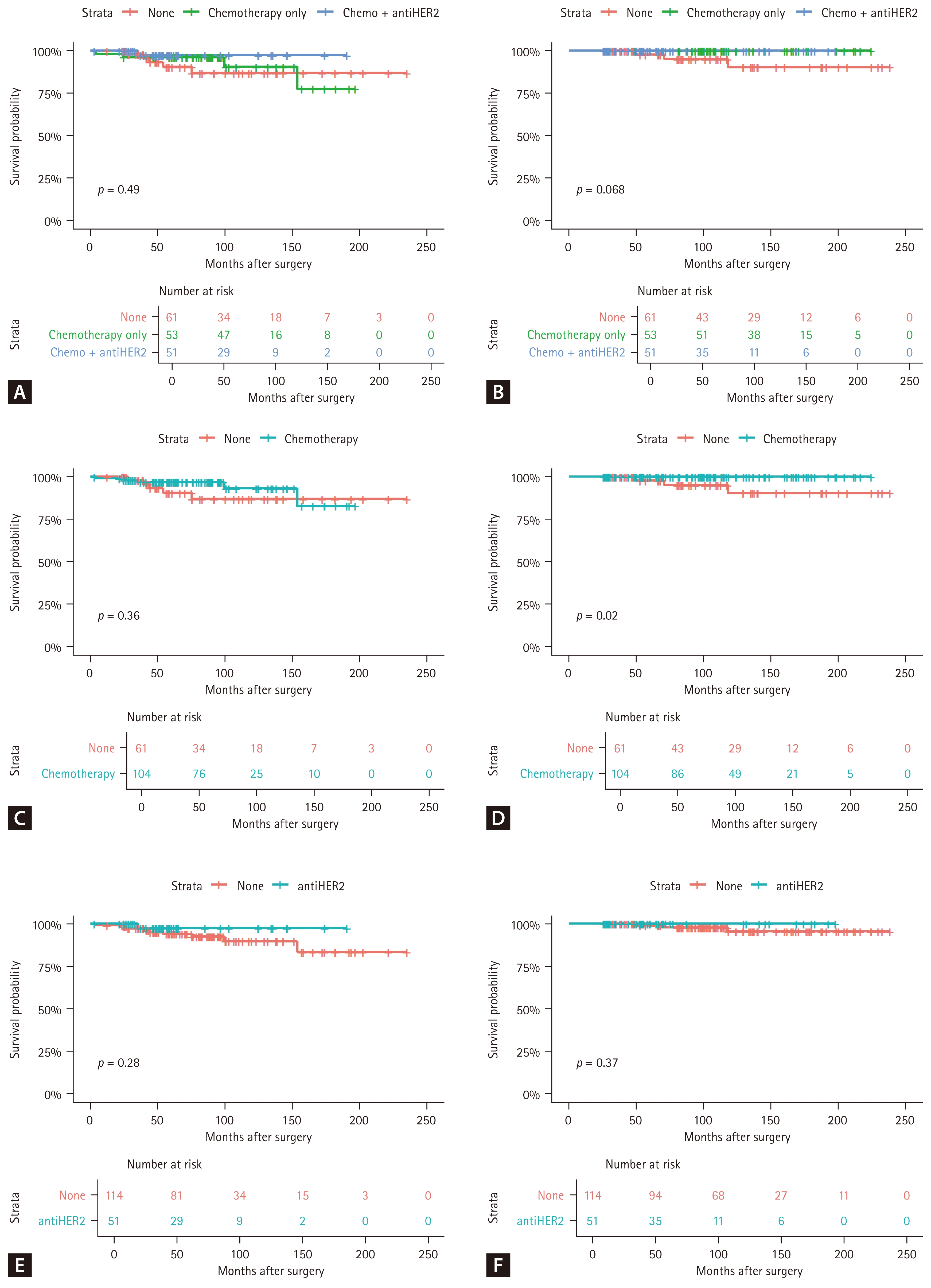
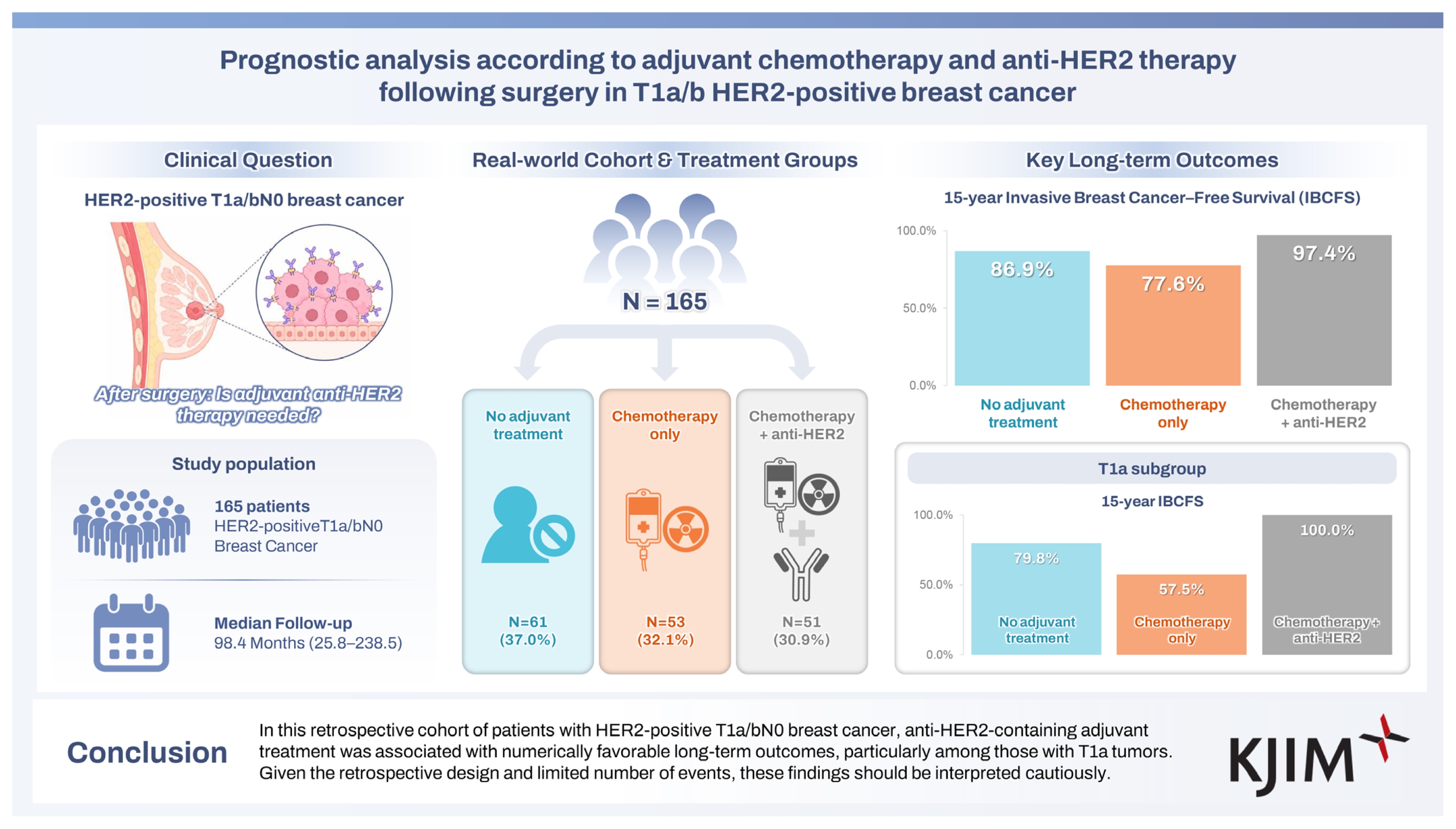
When examining IBCFS according to adjuvant treatment, patients who received chemotherapy plus anti-HER2 therapy showed the most favorable long-term outcomes, although the difference among the three groups was not statistically significant (Fig. 1, Table 2). The 3-, 5-, 10-, and 15-year IBCFS rates were 98.1%, 90.6%, 86.9%, and 86.9% in the no-treatment group, 96.2%, 96.2%, 90.6%, and 77.6% in the chemotherapy-only group, and 97.4%, 97.4%, 97.4%, and 97.4% in the chemotherapy plus anti-HER2 group, respectively (p = 0.492; Fig. 1, Table 2).
In the binary comparison according to anti-HER2 exposure, the respective 3-, 5-, 10-, and 15-year IBCFS rates were 97.4%, 97.4%, 97.4%, and 97.4% in patients who received anti-HER2 therapy, compared with 97.3%, 93.9%, 89.8%, and 83.4% in those who did not (p = 0.282). In contrast, the corresponding IBCFS rates were 96.9%, 96.9%, 93.2%, and 82.8% in patients who received chemotherapy and 98.1%, 90.6%, 86.9%, and 86.9% in those who did not (p = 0.357).
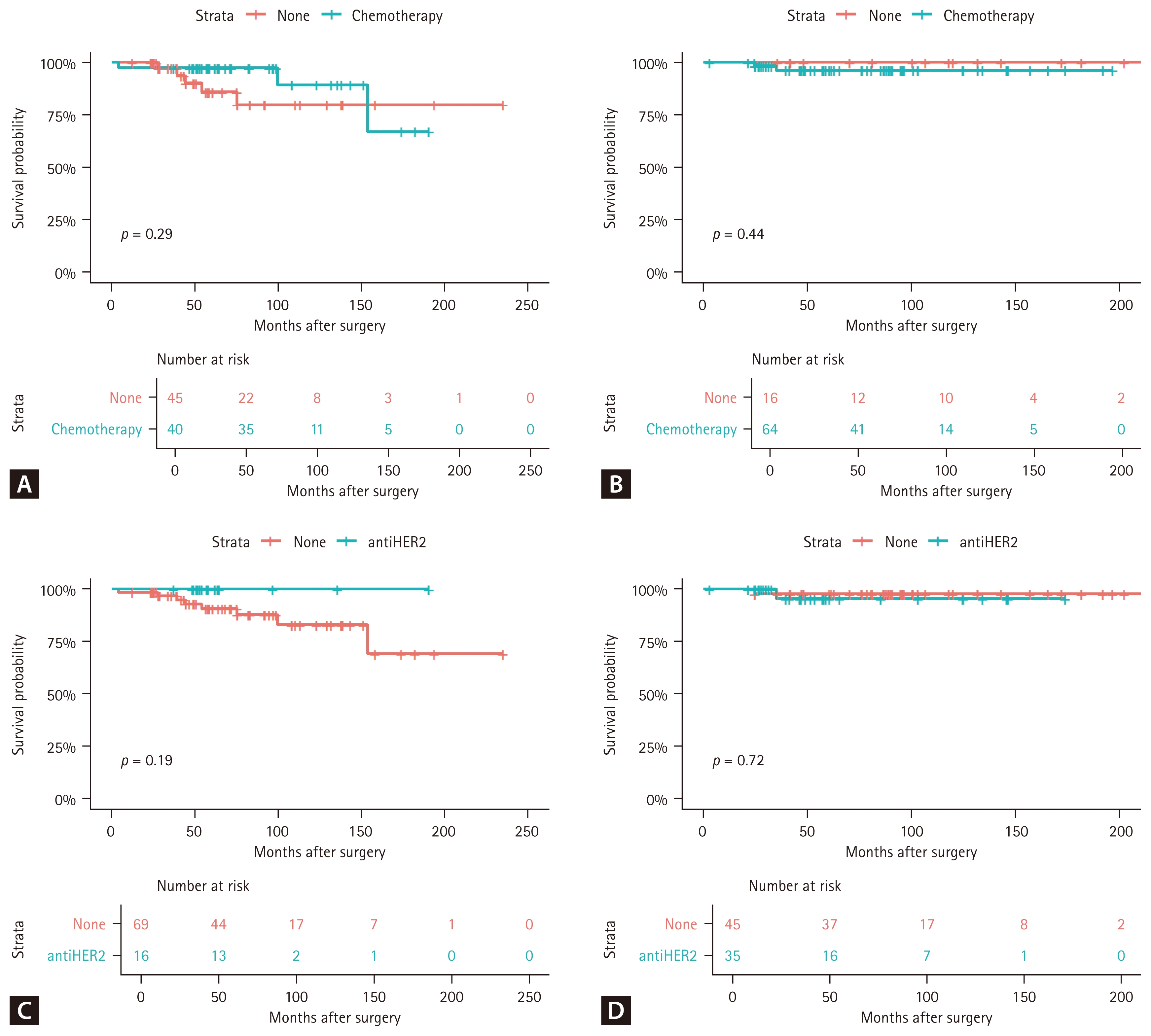
When stratified by tumor size, the apparent numerical benefit of anti-HER2-containing treatment was mainly observed in patients with T1a tumors (Fig. 2, Table 3). Among patients with T1a tumors, the 3-, 5-, 10-, and 15-year IBCFS rates were 97.2%, 86.0%, 79.8%, and 79.8% in the no-treatment group; 95.8%, 95.8%, 86.2%, and 57.5% in the chemotherapy-only group; and 100% at 3, 5, 10, and 15 years in the chemotherapy plus anti-HER2 group (p = 0.363), respectively. Likewise, among patients with T1a tumors, those who received anti-HER2 therapy maintained 100% IBCFS at 3, 5, 10, and 15 years, whereas those who did not had IBCFS rates of 96.9%, 90.9%, 83.0%, and 69.2%, respectively (p = 0.195).
By contrast, among patients with T1b tumors, IBCFS outcomes were favorable regardless of the treatment group. The IBCFS rates at 3, 5, 10, and 15 years were 100% in the no-treatment group, 96.6% in the chemotherapy-only group, and 95.5% in the chemotherapy plus anti-HER2 group (p = 0.744). Similarly, for T1b tumors, the IBCFS rates at 3, 5, 10, and 15 years were 97.8% in patients who did not receive anti-HER2 therapy and 95.5% in those who did (p = 0.719).
IDFS according to adjuvant treatments
Univariable and multivariable analyses based on baseline characteristics revealed no significant prognostic factors for IDFS (Supplementary Table 3).
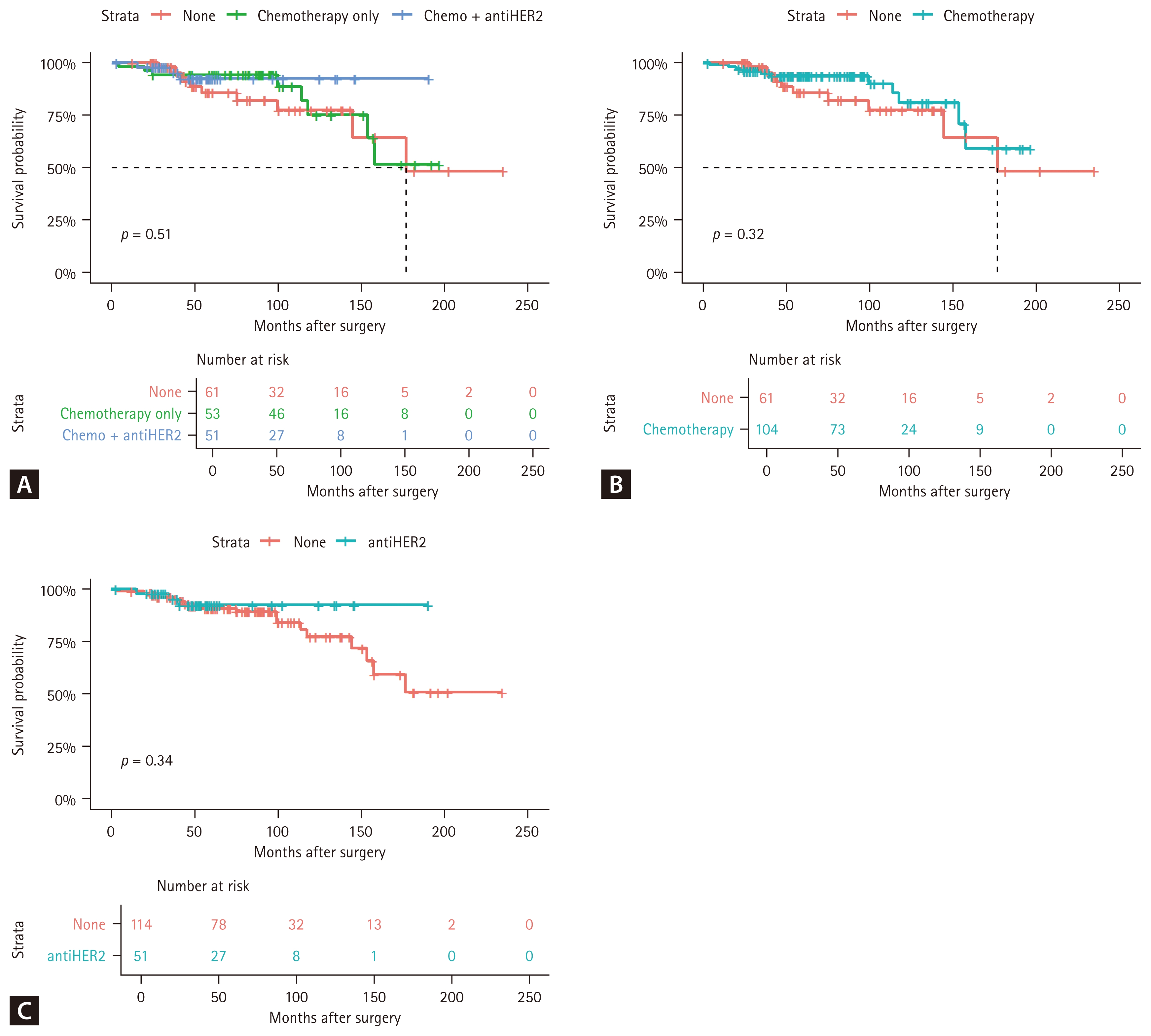
When examining IDFS according to adjuvant treatment, patients who received chemotherapy plus anti-HER2 therapy showed the most favorable long-term outcomes, although the difference among the three treatment groups was not statistically significant (Fig. 3, Supplementary Table 4). The 3-, 5-, 10-, and 15-year IDFS rates were 98.1%, 85.9%, 77.4%, and 48.4% in the no-treatment group; 94.3%, 94.3%, 75.1%, and 51.5% in the chemotherapy-only group; and 95.4%, 92.5%, 92.5%, and 92.5% in the chemotherapy plus anti-HER2 group, respectively (p = 0.51).
In the binary comparison according to anti-HER2 exposure, the respective 3-, 5-, 10-, and 15-year IDFS rates were 95.4%, 92.5%, 92.5%, and 92.5% in patients who received anti-HER2 therapy, compared with 96.4%, 90.9%, 77.4%, and 50.8% in those who did not (p = 0.34). Similarly, the corresponding IDFS rates were 95.0%, 93.8%, 81.1%, and 59.1% in patients who received chemotherapy and 98.1%, 85.9%, 77.4%, and 48.4% in those who did not (p = 0.32).
When stratified by tumor size, the numerical advantage of anti-HER2-containing treatment was not confined to a single subgroup, but rather its pattern differed between T1a and T1b tumors (Supplementary Fig. 1, Supplementary Table 5). Among patients with T1a tumors, the respective 3-, 5-, 10-, and 15-year IDFS rates were 97.2%, 82.2%, 76.3%, and 38.2% in the no-treatment group; 95.8%, 95.8%, 64.7%, and 43.1% in the chemotherapy-only group; and 100.0%, 93.3%, 93.3%, and 93.3% in the chemotherapy plus anti-HER2 group (p = 0.40). Likewise, among patients with T1a tumors, those who received anti-HER2 therapy had IDFS rates of 100%, 93.3%, 93.3%, and 93.3% at 3, 5, 10, and 15 years, whereas those who did not had IDFS rates of 96.9%, 88.9%, 69.6%, and 38.6%, respectively (p = 0.34).
In contrast, among patients with T1b tumors, the 3-, 5-, 10-, and 15-year IDFS rates were 100.0%, 93.3%, 83.0%, and 55.3% in the no-treatment group; 93.1%, 93.1%, 93.1%, and 62.1% in the chemotherapy-only group; and 92.4% at 3, 5, 10, and 15 years in the chemotherapy plus anti-HER2 group, respectively (p = 0.84). Similarly, for T1b tumors, the respective IDFS rates were 95.6%, 93.2%, 87.4%, and 59.9% in patients who did not receive anti-HER2 therapy and 92.4% at 3, 5, 10, and 15 years in those who did (p = 0.73).
OS according to adjuvant treatments
When examining OS according to adjuvant treatment, patients who received chemotherapy-containing treatment showed numerically favorable long-term outcomes compared with those who did not receive adjuvant treatment, although the difference among the three groups did not reach statistical significance. The 5-, 10-, and 15-year OS rates were 97.7%, 90.4%, and 90.4% in the no-treatment group and 100% at all three time points in both the chemotherapy-only and chemotherapy plus anti-HER2 groups (p = 0.068; Fig. 1, Table 4).
Among the 104 patients who received chemotherapy, OS remained 100% at 5, 10, and 15 years, whereas the corresponding rates for the 61 patients who did not receive chemotherapy were 97.7%, 90.4%, and 90.4%, respectively (p = 0.02).
Among the 51 patients who received anti-HER2 therapy, OS remained 100% at 5, 10, and 15 years. In comparison, the rates for the 114 patients who did not receive anti-HER2 therapy were 98.9%, 95.6%, and 95.6%, respectively (p = 0.37).
Recurrence details
A total of 11 breast cancer recurrence events were identified, including three ipsilateral local recurrences, one regional recurrence, four distant recurrences, and three contralateral breast events (Supplementary Table 6). In addition, 10 non-breast secondary malignancies were recorded, including thyroid cancer (n = 2), lung cancer (n = 2), endometrial cancer (n = 1), colon cancer (n = 1), pancreatic cancer (n = 1), cervical neoplasia/cancer (n = 1), gastric gastrointestinal stromal tumor (n = 1), and diffuse large B-cell lymphoma (n = 1). Among recurrent breast events, subtype discordance from the primary HER2-positive tumor was identified in two cases: one contralateral hormone receptor-positive/HER2-negative breast cancer and one triple-negative breast cancer.
Adverse event profiles
Adverse event data retrospectively collected from medical records were categorized based on the presence or absence of events rather than grade-specific toxicity. Among patients who received chemotherapy-containing adjuvant treatment, any-grade adverse events were documented in 50 of 53 patients (94.3%) in the chemotherapy-only group and 44 of 51 patients (86.3%) in the chemotherapy plus anti-HER2 group (p > 0.999). Any-grade anemia was reported in 38 patients (71.7%) and 37 patients (72.5%), respectively (p = 0.374), whereas febrile neutropenia occurred in 22 patients (41.5%) and 13 patients (25.5%), respectively (p = 0.248). Among patients who received anti-HER2 therapy, no clinically documented heart failure or decrease in left ventricular ejection fraction was identified.
DISCUSSION
The efficacy of adjuvant chemotherapy and anti-HER2 therapy in patients with T1a or T1b N0 HER2-positive early breast cancer remains a subject of ongoing debate [7,10–12,19–21]. Several retrospective studies have reported poorer outcomes in patients with T1a/T1b N0 HER2-positive breast cancer who did not receive adjuvant therapy compared with other subtypes, with one study reporting a 5-year recurrence-free survival rate of 77.1% (95% CI, 67–85%) [22]. In contrast, recent studies have shown a lower risk of distant recurrence in untreated patients (2–7%), highlighting the controversy surrounding prognosis and the role of adjuvant therapy in this population [19,20]. Kolben et al. [21] reported favorable outcomes for node-negative tumors smaller than 1 cm, particularly for those under 0.5 cm, where adjuvant chemotherapy showed no benefit. Similarly, an Italian observational study involving 303 patients found no significant difference in 5-year survival rates between patients who received adjuvant chemotherapy alone and those who received adjuvant chemotherapy with trastuzumab (95% with trastuzumab vs. 94.3% without trastuzumab, adjusted p = 0.621) [10]. The majority of patients who received chemotherapy alone were hormone receptor-positive and received adjuvant endocrine therapy, suggesting that trastuzumab may be less essential in hormone receptor-positive breast cancer. Conversely, a prospective single-center cohort study by Yang and Qu [12] analyzed data from January 2017 to December 2019 and included 168 patients with T1a/T1b N0 HER2-positive breast cancer. Approximately 60.7% of patients received both chemotherapy and targeted therapy, 28% received chemotherapy alone, and 11.3% received no adjuvant treatment. The 3-year IDFS rates were significantly higher in patients who received chemotherapy or combined chemotherapy and targeted therapy compared with untreated patients (100% vs. 97.9% vs. 89.5%, p < 0.001), with low rates of cardiac complications reported [12]. Another retrospective study also demonstrated significantly improved DFS in patients treated with adjuvant chemotherapy and trastuzumab [7]. A Canadian prospective registry study involving 583 patients with T1ab N0 HER2-positive breast cancer reported a 3-year survival rate of 99.1% compared with 96.9% in an untreated control group of 13,296 patients (adjusted HR 0.59, 95% CI 0.29–1.20) [11]. However, adjuvant chemotherapy and trastuzumab were associated with increased risks of coronary artery disease and febrile neutropenia. A 2023 systematic review and meta-analysis that included these heterogeneous retrospective data suggested that adjuvant trastuzumab-containing therapy was associated with improved prognosis in patients with HER2-positive T1a/bN0 breast cancer, although the available evidence was limited by the non-randomized nature of the included studies and between-study heterogeneity [23].
Despite this uncertainty, adjuvant chemotherapy and anti-HER2 therapy are frequently used in clinical practice. In particular, the single-arm phase 2 APT trial established weekly paclitaxel plus 1 year of trastuzumab as a widely adopted de-escalated regimen for small, node-negative HER2-positive breast cancer. In the final 10-year analysis, the APT regimen showed durable long-term outcomes, with a 10-year IDFS of 91.3%, a 10-year recurrence-free interval of 96.3%, and a 10-year OS of 94.3%, supporting this regimen as a reasonable treatment standard in this setting. However, because APT was a single-arm study, it did not address whether less toxic or chemotherapy-sparing HER2-directed strategies could provide comparable efficacy [9,24].
In this context, the randomized phase 2 ATEMPT trial further expanded the de-escalation landscape by evaluating adjuvant T-DM1 versus paclitaxel plus trastuzumab in patients with stage I HER2-positive breast cancer. In the recently reported 5-year analysis, 1 year of adjuvant T-DM1 was associated with excellent outcomes, with a 5-year IDFS of 97.0%, a recurrence-free interval of 98.3%, and an OS of 97.8% [25]. Although ATEMPT was not powered for a formal efficacy comparison between the regimens, and the 5-year IDFS in the TH arm was also favorable at 91.1%, these data suggest that multiple de-escalated anti-HER2-containing approaches can achieve excellent long-term disease control in selected patients with stage I disease. Nevertheless, treatment selection in this population remains challenging because efficacy must be balanced against tolerability and overtreatment in a group with an overall low event rate. The ongoing ATEMPT 2.0 trial was designed to further refine the treatment strategy by comparing TH with a shorter course of T-DM1 followed by trastuzumab, with the aim of maintaining efficacy while reducing toxicity [26]. Taken together, these studies indicate that the future direction of adjuvant treatment for small, node-negative HER2-positive breast cancer lies not only in determining the population of patients to receive anti-HER2-containing therapy but also in identifying those who may benefit from less intensive, biologically tailored regimens.
This retrospective, single-center study evaluated the efficacy and safety of adjuvant chemotherapy and anti-HER2 therapy in patients with T1a or T1b N0 HER2-positive early breast cancer. Overall, patients who received chemotherapy plus anti-HER2 therapy showed the most favorable long-term IBCFS, although the differences among the treatment groups were not statistically significant. When stratified by tumor size, the apparent numerical benefit of anti-HER2-containing treatment was more evident in patients with T1a tumors. In this subgroup, the 15-year IBCFS rate was 79.8% in the no-treatment group, 57.5% in the chemotherapy-only group, and 100% in the chemotherapy plus anti-HER2 group. By contrast, patients with T1b tumors showed similarly favorable IBCFS outcomes across the treatment groups, suggesting that treatment effect may differ according to tumor size and underlying recurrence risk. The seemingly better prognosis of untreated T1b tumors compared with that of untreated T1a tumors should, however, be interpreted with caution. Because patients with T1b tumors were more likely to receive chemotherapy and anti-HER2 therapy, this paradoxical finding may reflect treatment-selection imbalance and the small number of events rather than a true biologic advantage of T1b disease. In this regard, our data may indirectly suggest that, in real-world practice, clinicians tended to select more intensive adjuvant treatment for T1b tumors perceived to be at higher risk.
Regarding IDFS, a similar numerical advantage of anti-HER2-containing treatment was observed overall; however, the subgroup patterns were less consistent than those for IBCFS and differed according to tumor size. Taken together, these findings suggest that anti-HER2-containing adjuvant treatment may be associated with favorable long-term outcomes in selected patients, but these observations should be interpreted cautiously given the small sample size and limited number of events.
From the perspective of OS, chemotherapy-containing treatment was associated with numerically favorable long-term outcomes compared with no adjuvant treatment, and patients who received chemotherapy showed significantly better OS than those who did not. However, anti-HER2 therapy was not associated with a statistically significant OS difference in this cohort. Given the small number of deaths and the non-randomized nature of treatment selection in this retrospective cohort, these OS findings should be interpreted cautiously.
With respect to safety, no significant differences in any-grade adverse events were observed between the chemotherapy-only and chemotherapy plus anti-HER2 groups. Likewise, no significant between-group differences were observed in any-grade anemia or febrile neutropenia, and no clinically documented heart failure or decline in left ventricular ejection fraction was identified among patients who received anti-HER2 therapy. Because trastuzumab-related cardiotoxicity is a well-recognized adverse effect, cardiac monitoring remains an important component of treatment in clinical practice [27]. However, the retrospective collection of adverse event data and the absence of grade-specific toxicity information limit definitive safety comparisons.
This study has some limitations. First, it was a retrospective study conducted at a single institution, which introduces the possibility of selection bias and limits the generalizability of the findings. Second, the sample size was relatively small, and the numbers of recurrence and death events were limited, reducing the statistical power to detect differences between treatment groups. Third, baseline clinicopathologic characteristics were not fully balanced across treatment groups, and treatment allocation was not randomized, which might have influenced both treatment selection and long-term outcomes. Fourth, adverse event data were retrospectively collected from medical records and were available primarily in the form of presence or absence of events rather than grade-specific toxicity, limiting detailed safety comparisons. Finally, biomarker information for recurrent lesions was available only in a limited number of cases, restricting a more comprehensive assessment of subtype changes at recurrence.
In conclusion, anti-HER2-containing adjuvant treatment was associated with numerically favorable long-term outcomes in this cohort of patients with HER2-positive T1a/bN0 breast cancer, particularly among those with T1a tumors. Because of the retrospective design, baseline imbalances between the treatment groups, and the limited number of events, these findings should be interpreted with caution. Further large-scale prospective studies are warranted to refine risk stratification and optimize adjuvant treatment strategies for patients with small, node-negative HER2-positive breast cancer.
KEY MESSAGE
1. Anti-HER2 therapy is a key treatment modality for HER2-positive breast cancer.
2. In patients with HER2-positive T1a/b early breast cancer, anti-HER2-containing adjuvant treatment was associated with numerically favorable long-term IBCFS and IDFS, with the benefit being more evident for IBCFS in those with T1a tumors.


 PDF Links
 PubReader
 ePub Link
 XML Download
 Full text via DOI
 Download Citation
 Supplement figure 1
 Print
Print