Syncope as a predictor of sudden cardiac arrest: a nationwide population-based study
Article information

Abstract
Background/Aims
The risk of sudden cardiac arrest (SCA) in patients with prior syncope events is not fully understood. We examined the association between syncope and the risk of future SCA.
Methods
Data were obtained from the Korean National Health Insurance Service database. Of those individuals who underwent the 2012 health screening, 40% were randomly sampled. The diagnoses of syncope and SCA were based on the International Classification of Disease, 10th edition.
Results
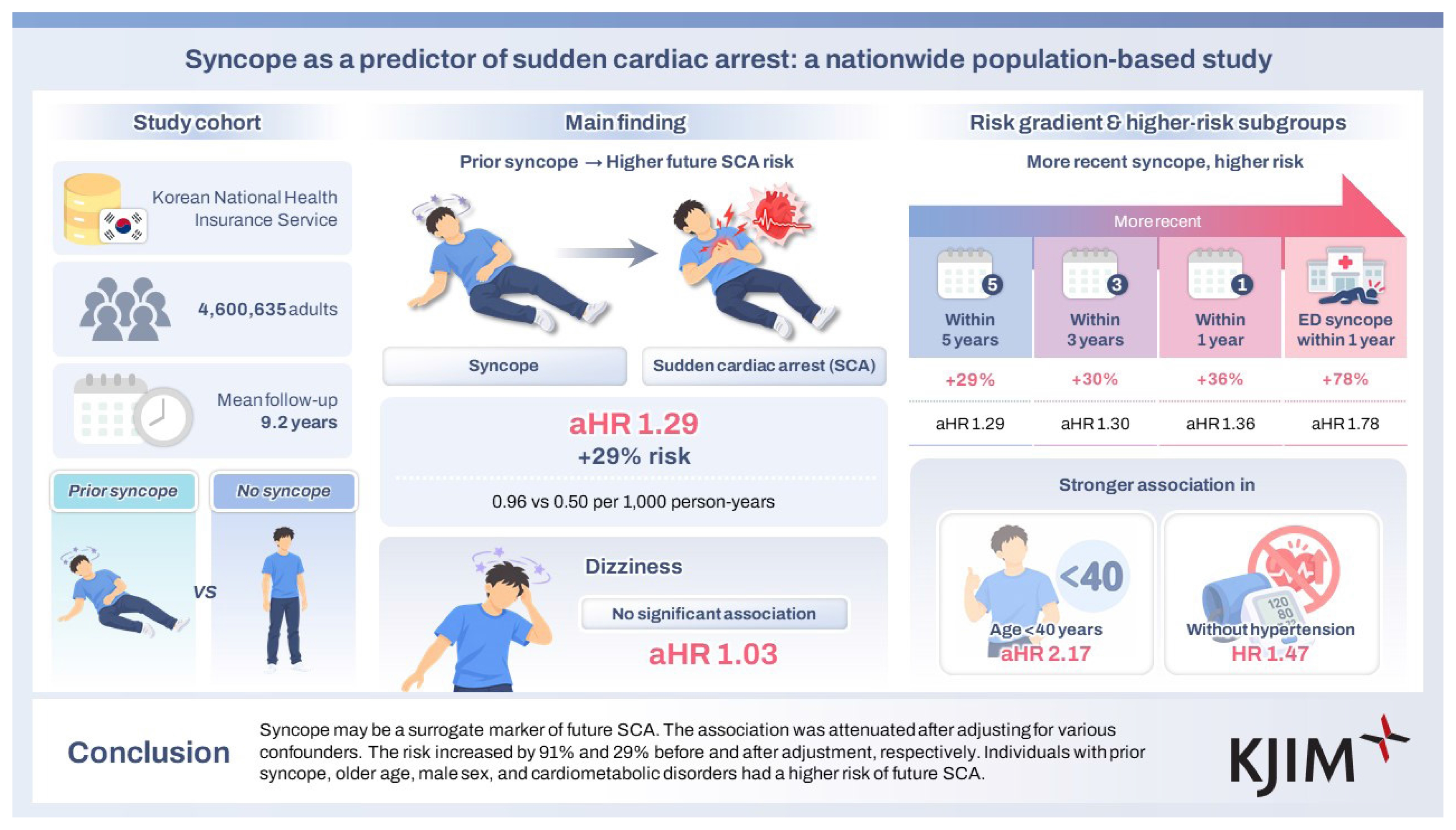
A total of 4,600,635 subjects were analyzed with a mean of 9.2 ± 1.3 years of follow-up. The incidence of SCA per 1,000 person-years were 0.96 and 0.50 in people with and without syncope, respectively, within 5 years prior to health screening (hazard ratio [HR], 1.91; p < 0.001). After adjusting for various confounders, the presence of syncope was associated with a 29% increased risk of developing SCA (HR, 1.29; p < 0.001). Syncope within 3 years and within 1 year prior to health screening was associated with a 30% and 36% increased risk of SCA, respectively. Dizziness was not associated with the risk of future SCA. Significant interactions of syncope with age/hypertension were observed in young and hypertension-free individuals, who were more vulnerable to SCA.
Conclusions
Syncope may be a surrogate marker of future SCA. The association was attenuated after adjusting for various confounders. The risk increased by 91% and 29% before and after adjustment, respectively. Individuals with prior syncope, older age, male sex, and cardiometabolic disorders had a higher risk of future SCA.
INTRODUCTION
Sudden cardiac arrest (SCA) is a medical emergency that can have grave consequences for both victims and society [1,2]. An important feature of SCA is its unpredictability. Various risk factors for SCA have been identified, which include hypertension, diabetes, obesity, and metabolic syndrome [3–5]. Coronary artery disease and heart failure are other important risk factors for SCA [6–9]. However, the symptoms preceding SCA have not been fully revealed. In fact, most SCA events occur without any warning symptoms, as reflected in the nomenclature (“sudden”).
The risk of SCA in patients with a history of syncope warrants further investigation. The major causes of syncope can be classified as cardiogenic, neurogenic, or vestibular. The causes of cardiogenic syncope can be diverse and include tachy- or bradyarrhythmias, coronary artery disease, valvular disease, or heart failure. Therefore, the risk factors for syncope and SCA overlap. Some syncopal events may be milder forms of SCA. For example, ventricular tachycardia that lasts for a sufficiently long time can lead to SCA; however, the consequences of brief tachycardia may be limited to syncope rather than extend to SCA. Although a substantial proportion of syncope events are due to noncardiac causes or vasovagal responses, which usually show a benign clinical course [10,11], some are due to cardiac causes and may lead to SCA in future. However, clinical factors associated with the risk of SCA in patients with prior syncope remain unclear.
This study was conducted to evaluate the risk of developing SCA in patients with prior syncope. In addition, we sought to identify risk factors that predispose patients with syncope to future SCA. Despite its grave prognosis, the incidence of SCA is not high, at 0.5 cases per 1,000 person-year according to our previous study [3,5]. Therefore, we utilized a nationwide healthcare cohort in South Korea to obtain a sufficient sample size to perform this analysis.
METHODS
Study cohort
This study used data from the Korean National Health Insurance Service (K-NHIS) database. In South Korea, all citizens are mandated to subscribe to the K-NHIS, an exclusive single healthcare insurance system. A detailed description of the K-NHIS data has been provided in the supplementary material.
The K-NHIS database is open for use by medical researchers if both the official review committee (https://nhiss.nhis.or.kr/) of the K-NHIS and the researcher’s Institutional Review Board approve the study. Our study obtained formal approval from both the Institutional Review Board of the Korea University of Medicine Anam Hospital (IRB No. 2021AN0185) and the Official Review Committee of the K-NHIS. The need for obtaining informed consent was waived by the institutional review board of Korea University of Medicine Anam Hospital because this study was based on a retrospective analysis. Both the principles of the 2013 Declaration of Helsinki and the legal regulations of South Korea were strictly followed throughout the study.
Patient selection
We screened people who underwent nationwide health screening in 2012 in South Korea and who were aged 20 years or older. Patients younger than 20 years were excluded. Individuals who had experienced SCA before the health screening in 2012 were excluded. The date of the 2012 health screening was the start of clinical follow-up. Because the identification of SCA in this study was based on the International Classification of Disease, 10th edition (ICD-10) codes, ICD-10 codes assigned within 1 year of clinical follow-up can reflect either a true SCA event or a repeat report of ICD-10 codes for SCA that had occurred before the start of follow-up. Therefore, we excluded SCA events that were reported within 1 year of the 2012 health screening. The participants were followed-up until December 2022.
Identification of SCA
The primary outcome of this study was SCA that occurred 1 year after the 2012 health screening. Both aborted and non-aborted cases of SCA were included in the study. A report on the ICD-10 codes for SCA in the emergency department was required to diagnose SCA. Selected ICD-10 codes for SCA were as follows: (i) cardiac arrest with successful resuscitation (I46.0); (ii) SCA (I46.1); (iii) cardiac arrest, cause unspecified (I46.9); (iv) ventricular fibrillation and flutter (I49.0); (v) instantaneous death (R96.0); and (vi) death occurring less than 24 hours after symptom onset (R96.1). The performance of cardiopulmonary resuscitation with a reported procedure code in the emergency department, but without a report of ICD-10 codes for SCA, was also classified as SCA. The accuracy of our strategy in identifying SCA using ICD-10 codes has been verified in our previous reports [3–5,12,13].
If a potential non-cardiac cause of death preceded a report of ICD-10 codes for SCA by up to 6 months, that event was not classified as SCA. Non-cardiac causes of death included hemorrhagic or ischemic stroke, drowning, asphyxia, suffocation, sepsis, major trauma, anaphylaxis, gastrointestinal bleeding, lightning strike, electric shock, or burn. These events were not considered SCA. Supplementary Table 1 describes the ICD-10 codes used to identify various medical diseases.
Syncope
The ICD-10 code used for detecting syncope was R55. People who had a report of R55 within 5 years prior to the 2012 health screening were defined as having a history of syncope. For sensitivity analysis, the diagnostic window was set at 3 years and at 1 year before the 2012 health screening. The risk of SCA was compared between patients with and without syncope. The association between dizziness (R42) and SCA was also evaluated. The incidence of SCA was calculated as the numbers per 1,000 person-years of follow-up.
Statistical analysis
Categorical variables are presented as numbers and proportions while continuous variables are expressed as means ± standard deviations or medians with interquartile ranges as appropriate. Student’s t-test (or the Mann-Whitney U test if data were non-normally distributed) was used to compare continuous variables. For categorical variables, the chi-squared test or Fisher’s exact test was used, as appropriate. The cumulative incidence of SCA was determined using the Kaplan-Meier survival curve and was compared using the log-rank test. Hazard ratios (HRs) and 95% confidence intervals (CIs) were calculated using the Cox proportional hazards model. For multivariate analysis, three models were used: (i) Model 2 was adjusted for age and sex; (ii) Model 3 was adjusted for age, sex, body mass index, income level, smoking, alcohol drinking, regular exercise level, diabetes mellitus, hypertension, dyslipidemia, chronic kidney disease, heart failure, atrial fibrillation, depression, hyperthyroidism, and hypothyroidism; and (iii) Model 4 was adjusted for age, sex, waist circumference, income level, smoking, alcohol drinking, regular exercise level, fasting glucose, systolic blood pressure, low-density lipoprotein, estimated glomerular filtration rate, heart failure, atrial fibrillation, depression, hyperthyroidism, and hypothyroidism. All tests were two-tailed, and statistical significance was set at p < 0.05. All statistical analyses were performed using SAS version 9.2 (SAS Institute, Cary, NC, USA).
RESULTS
Baseline characteristics
Among individuals aged 20 years and older who underwent a nationwide health check-up in 2012, 4,910,068 were selected through 40% random sampling (Fig. 1). Individuals who (i) had a previous diagnosis of SCA (n = 820), (ii) had missing data (n = 296,952), or (iii) had an SCA event within 1 year of health screening (n = 11,661) were excluded. Finally, 4,600,635 subjects were included in the analysis.
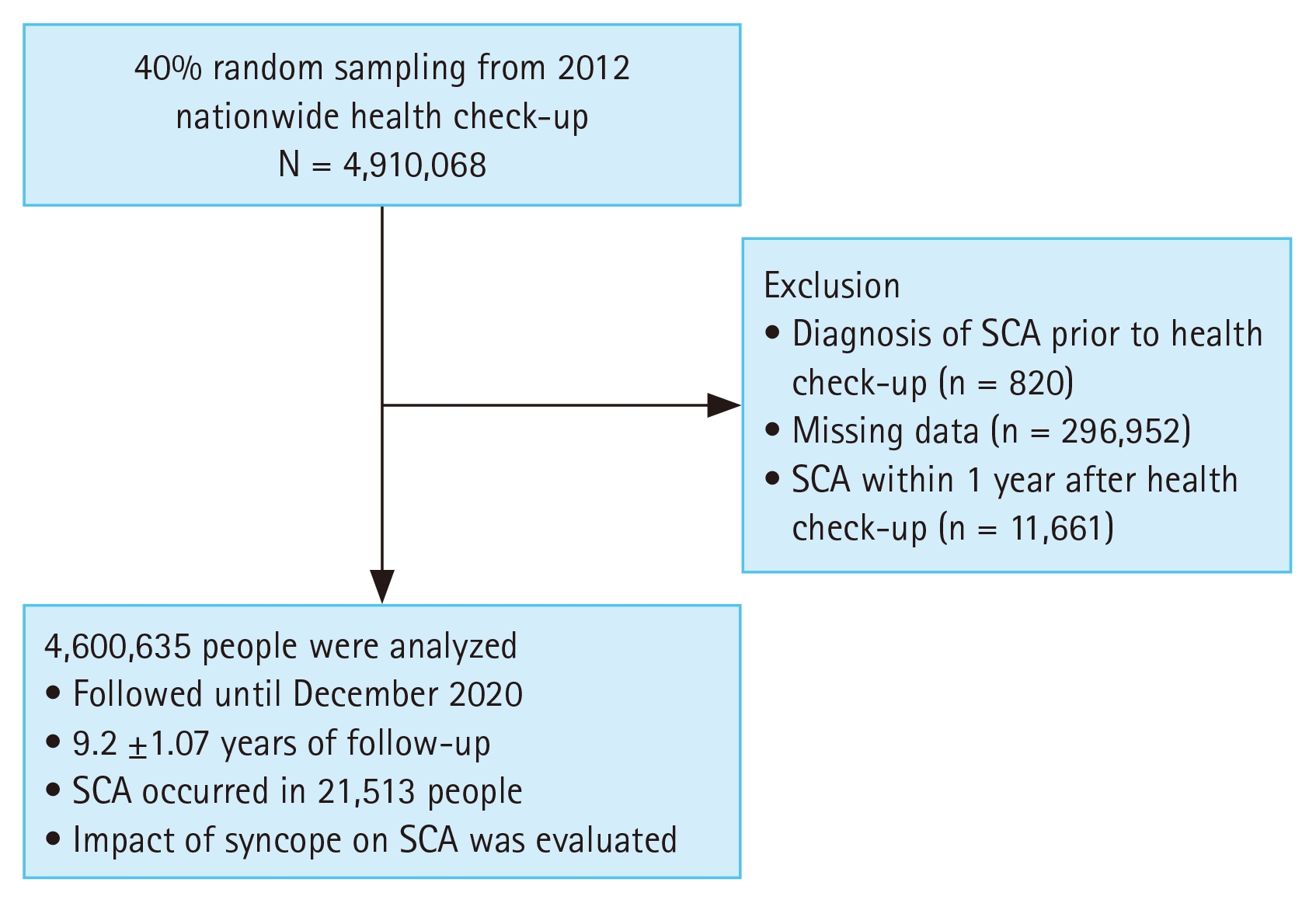
Flowsheet of the study. SCA, sudden cardiac arrest. asymptomatic group (Supplementary Fig. 1).
During a mean of 9.2 ± 1.3 years of follow-up, SCA occurred in 21,513 (0.47%) individuals. The SCA group was significantly older (62.75 vs. 48.22) and had a higher proportion of males (70.39% vs. 53.97%) than did the non-SCA group (both p < 0.001; Table 1). Hypertension (58%), dyslipidemia (31.93%), and diabetes mellitus (28.85%) were the three most common comorbidities in the SCA group. A smaller proportion of participants in the non-SCA group were diagnosed with these comorbidities. In the SCA group, 405 individuals (1.88%) experienced syncope, as compared to 46,435 individuals (1.01%) in the non-SCA group. Additionally, diagnoses of syncope or dizziness were more frequent in the SCA than in the non-SCA group (25.45% vs. 16.40%, p < 0.001). Cardiac diseases, such as heart failure or atrial fibrillation, were rare but were significantly more prevalent in the SCA than in the non-SCA group (4.16% vs. 0.73% for heart failure; 2.51% vs. 0.50% for atrial fibrillation).

Baseline characteristics
SCA and syncope
The SCA incidence was higher in individuals who had ICD-10 codes for syncope than in those without syncope within 5 years prior to health screening (0.96 vs. 0.50 events per 1,000 person-years). In those who had a report of syncope in the emergency department, the incidence of SCA was higher, at 1.19 events per 1,000 person-years. The cumulative incidence of SCA increased linearly during the follow-up period, and the differences in the incidence of SCA between patients with and without syncope diverged consistently (Fig. 2). The same pattern of differences were seen irrespective of the different definitions of syncope: syncope within 5, 3, and 1 year prior to health screening (Fig. 2). The difference was more pronounced between those who experienced syncope within 1 year prior to health screening and those who did not. When symptoms of syncope and dizziness were included, a lower cumulative incidence of SCA was noted in people who had experienced neither symptom within 5 years prior to health screening (Supplementary Fig. 1). When the groups were divided into those with dizziness, those with syncope, and those who were asymptomatic, the highest SCA incidence probability was observed in the group with syncope that occurred within 5 years prior to health screening, whereas the lowest was observed in the
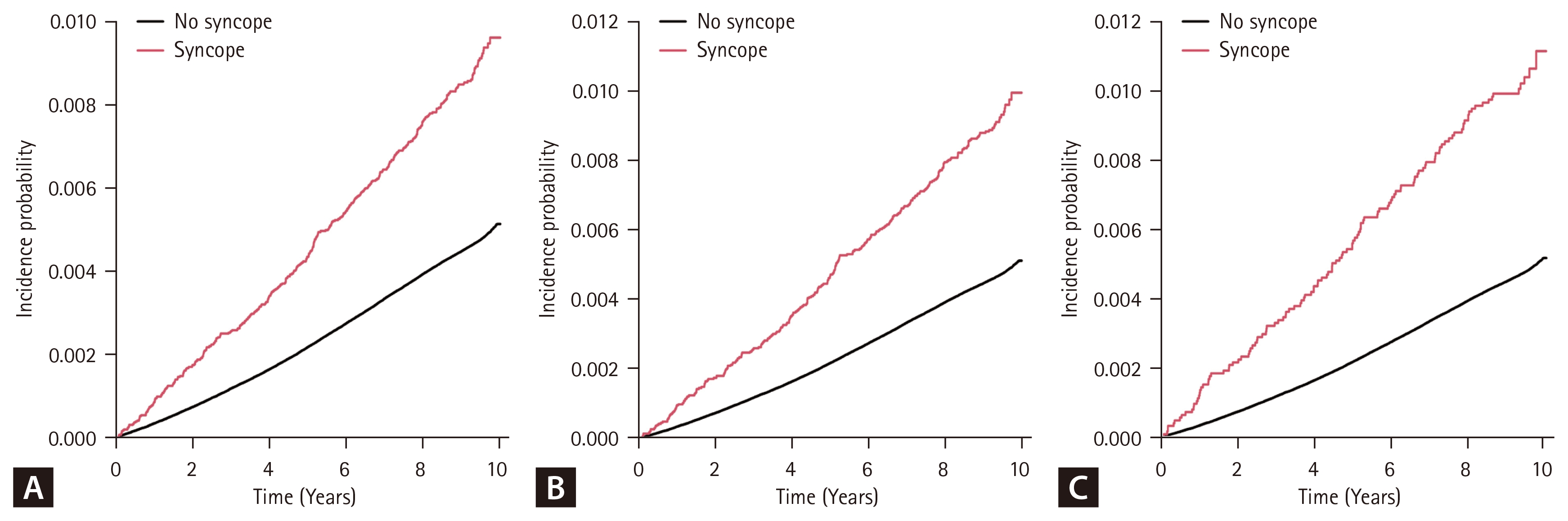
Probabilities of sudden cardiac arrest incidence. (A) Symptoms within 5 years of health screening. (B) Symptoms within 3 years of health screening. (C) Symptoms within 1 year of health screening.
In the multivariate analysis, individuals who experienced syncope within 5 years prior to health screening had a 29% increased risk of SCA as compared to those without syncope (adjusted HR, 1.29; 95% CI, 1.17–1.42; p < 0.001; Table 2). Dizziness within 5 years prior to health screening was not associated with an increased risk of SCA (adjusted HR, 1.03; 95% CI, 0.99–1.06; Table 2). In the group that experienced either syncope or dizziness, a 4.2% increased risk of SCA was observed (adjusted HR, 1.04; 95% CI, 1.01–1.08; p < 0.013; Table 2). In the group diagnosed with syncope in the emergency department, a significantly higher risk of SCA was noted than in other groups (adjusted HR, 1.43; 95% CI, 1.24–1.66; p < 0.001; Table 2).

Association between syncope and SCA
Individuals who experienced syncope within 3 years prior to the health screening showed a 30% increased risk of SCA (adjusted HR, 1.30; 95% CI, 1.16–1.46; p < 0.001; Table 3). When the window was limited to 1 year prior to health screening, the SCA risk increased by 36% (adjusted HR, 1.36; 95% CI, 1.14–1.62; p < 0.001; Table 3). More specifically, visiting the emergency department due to syncope within 1 year prior to health screening was associated with the highest risk of SCA (adjusted HR, 1.78; 95% CI, 1.37–2.31; p < 0.001; Table 3).

Sensitivity analysis
Subgroup analysis
The impact of syncope within 5 years before health screening on SCA risk was assessed among various subgroups. In general, individuals who experienced syncope showed an increased risk of SCA across various subgroups (Fig. 3). Age and hypertension demonstrated significant interactions with syncope.
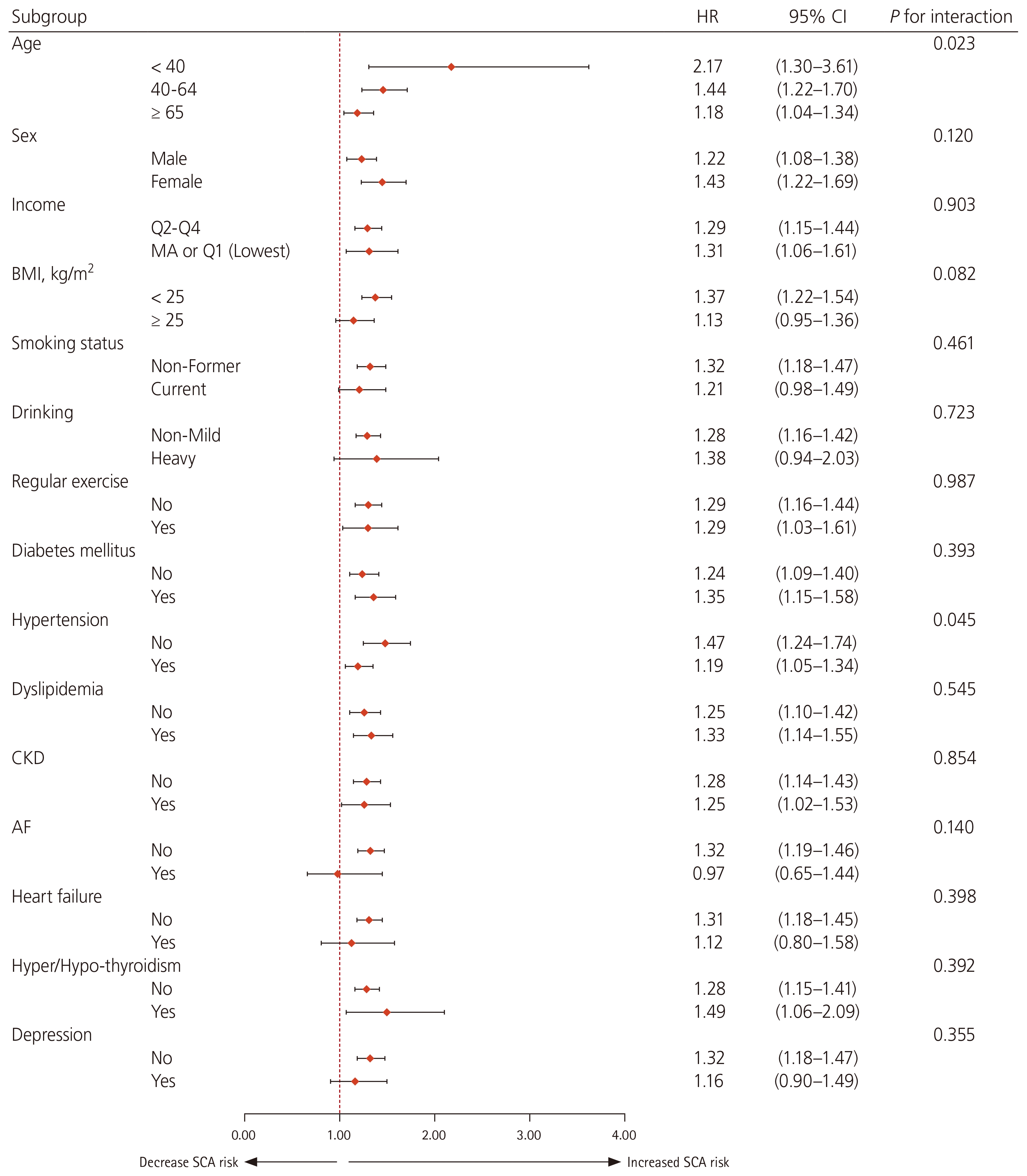
Subgroup analysis of SCA risk in patients who experienced syncope. The adjusted risk of SCA in Model 4 is shown as a forest plot. The risk of SCA was compared between patients who experienced syncope within 5 years of health screening and those who did not. Hazard ratios were adjusted for age, sex, waist circumference, income, smoking status, alcohol consumption status, regular exercise, systolic blood pressure, fasting glucose level, low-density lipoprotein cholesterol level, estimated glomerular filtration rate, heart failure, atrial fibrillation, thyroid disease, and depression. HR, hazard ratio; CI, confidence interval; Q, quartile; MA, medical aid; BMI, body-mass index; CKD, chronic kidney disease; AF, atrial fibrillation; SCA, sudden cardiac arrest.
Among individuals who had experienced syncope, those under the age of 40 years were more vulnerable to SCA than were those who were middle-aged or those aged 65 years and older (adjusted HR, 2.17 vs. 1.44 vs. 1.18 for each group; p-value for interaction = 0.023). Additionally, individuals without hypertension who experienced syncope had a significantly higher risk of SCA than did those with hypertension who experienced syncope (HR, 1.47 vs. 1.19 for each group; p-value for interaction = 0.045).
High-risk syncope
Among the 46,840 people who had experienced syncope within 5 years prior to health screening, 405 experienced SCA during the follow-up period. Their baseline characteristics are summarized in Table 4. Those in the SCA group were older (65.42 ± 13.12 vs. 51.97 ± 15.48 years; p < 0.001) and were more often men than were those in the non-SCA group (63.21% vs. 45.84%; p < 0.001; Table 4). The prevalence of hypertension (66.9% vs. 38.2%), diabetes mellitus (38.8% vs. 14.6%), dyslipidemia (43.2% vs. 27.2%), chronic kidney disease (23.7% vs. 7.0%), heart failure (8.4% vs. 2.2%), and atrial fibrillation (6.2% vs. 2.2%) was also significantly higher (all p < 0.001) in the SCA than in the non-SCA group.

Baseline demographics between SCA (−) vs. SCA (+) among people with syncope
DISCUSSION
We observed an association between a history of syncope and the risk of future SCA in a nationwide representative cohort of South Koreans. In the time-based analyses of this fixed cohort, syncope was assessed within 1, 3, and 5 years before the 2012 health screening date. Participants were considered to have syncope if the ICD-10 code R55 was recorded during each corresponding period before the index health screening. Sensitivity analyses using the 1-year and 3-year periods were conducted to evaluate whether more recent syncope was associated with a higher risk of SCA. Follow-up for SCA started on the date of the health screening and continued until SCA, death, or December 2022, whichever occurred first. As syncope was defined using claims recorded before the index date, exposure status was established at baseline. In people who experienced syncope within 5 years of enrollment (date of nationwide health screening), the HR for future SCA was 1.9. After adjusting for multiple covariates, including hypertension, diabetes mellitus, atrial fibrillation, heart failure, and depression, a history of syncope was associated with a 29% increase in the risk of SCA. The higher HRs observed for shorter time windows (HR, 1.29 for 5 years; 1.30 for 3 years; and 1.36 for 1 year) may indicate a stronger association between recent syncope and subsequent SCA risk. The association between syncope and SCA was stronger in individuals without hypertension, who had a 47% increase in the risk of SCA among those who experienced syncope. The results are summarized in graphical abstract.
The large sample size and low probability of underdetection of SCA are the major strengths of this study. The consequences of SCA are grave, but its incidence is very low, making statistical analyses with sufficient power difficult to achieve. To overcome this limitation, a significantly larger sample size, such as that of our cohort, is required. Detection of SCA can be difficult because SCA victims usually do not come to the hospital that manages the research cohort, but rather go to the hospital closest to the location at which the SCA occurs. Therefore, a risk remains for underdetection of SCA events. However, since we analyzed the K-NHIS database, which is a single, exclusive, and mandatory medical insurance system that does not allow unsubscribing, underdetection of SCA was unlikely in this study.
Syncope as a surrogate marker
Syncope and SCA share some common etiologies, such as coronary vasospasm, lethal ventricular arrhythmias, aortic stenosis, coronary artery disease, and hypertrophic cardiomyopathy [14–16]. The consequence of transient coronary vasospasm may be limited to clinical syncope, whereas prolonged vasospasm might lead to SCA. Non-sustained ventricular fibrillation may not result in SCA, sustained ventricular fibrillation might. Therefore, syncope may be a weaker indicator of potential SCA-causing conditions. In a case-control study performed with a prospective SCA registry in the Portland, Oregon, metropolitan region, syncope was associated with an increased risk of SCA in patients with coronary artery disease, with an odds ratio of 2.8 [14]. We also observed a significant association between a history of syncope and the risk of SCA. This association was maintained after adjusting for potential causes of SCA, such as atrial fibrillation, chronic kidney disease, and heart failure [17]. These results suggest that some syncope events, particularly those of cardiogenic origins, could present as SCA in future. The etiology of syncope is diverse. Vasovagal and neurally mediated syncope, particularly in young people, usually shows a benign clinical course [10]. However, as many cases of vasovagal syncope occur in individuals with inherited arrhythmias such as Long QT syndrome and Brugada syndrome, it is challenging to categorize syncope in young people as benign [18–20]. Thus, efforts to clinically differentiate inherited arrhythmias are also necessary. Moreover, syncope events in people with underlying cardiovascular disease should be managed carefully, because these patients can present with SCA in the near future.
Risk stratification
A strategy to stratify the risk of syncope events has been presented in a prior study [21]. Symptoms and signs indicating high-risk syncope include accompanying chest discomfort, palpitations before syncope, syncope during exertion, a relevant family history, and the presence of structural heart disease, such as aortic stenosis, cardiomyopathies, and congenital heart disease [21]. According to our data, factors that were associated with future SCA in people with prior syncope were old age, male sex, increased waist circumference, hypertension, diabetes mellitus, dyslipidemia, chronic kidney disease, heart failure, atrial fibrillation, and depression. In our non-adjusted analysis, syncope was associated with a 91% increased risk of SCA occurring. The HR reduced from 1.91 to 1.38 after adjusting for age and sex. After further adjustments for lifestyle, body weight status, metabolic conditions, heart failure, and atrial fibrillation, a 29% increase in the risk of SCA was found in individuals with prior syncope. This suggests that, despite syncope being independently associated with future SCA risk, part of its association is related to important confounders, such as age, sex, and accompanying metabolic and cardiovascular diseases. Since age, male sex, and various cardiometabolic diseases are significant risk factors for future SCA in people with prior syncope, it may be beneficial for older male patients to undergo intensive evaluation for cardiovascular disorders to determine the etiology of syncope in an attempt to prevent SCA.
Our findings should be interpreted cautiously, particularly in younger individuals without hypertension. Although the absolute risk of SCA was low, the observed interaction suggests that syncope may deserve additional attention even in some individuals who appear otherwise healthy. These results are not intended to imply that all isolated syncope carries high risk, but they support careful clinical decision-making and appropriate sequential evaluation when other concerning features are present, such as exertional syncope, palpitations, or a family history of sudden death. The stronger association observed in younger individuals and those without hypertension may further suggest that syncope has particular clinical relevance in subgroups with fewer conventional ischemic heart disease risk factors. However, because the present study did not classify SCA according to its underlying cause, these findings should not be interpreted as direct evidence that syncope is more specifically associated with non-ischemic SCA. The characteristics of patients with SCA in our study were generally consistent with previously established risk factors for SCA, including older age and male [22]. Given that coronary artery disease is a major cause of SCA in older individuals, our findings may also suggest a possible association with ischemic heart disease. However, because this study did not classify SCA according to its underlying cause, these interpretations should be made with caution.
Limitations
This study had some limitations. We identified various medical conditions, including SCA, through reports of ICD-10 codes; however, coding errors may have existed. Nevertheless, our coding strategy, particularly for SCA, has been validated in our prior studies [4,12,23]. Another limitation was the low incidence of SCA in the general population. Throughout a mean of 9.2 years of follow-up, 0.47% of the participants experienced SCA. However, the low incidence of SCA is the reason we utilized a nationwide healthcare insurance cohort in order to achieve sufficient statistical power, despite the intrinsic limitations of such an analysis, such as the potential presence of coding errors. Additionally, because this study was based on ICD codes, it may encompass a broad spectrum of syncope types, including vasovagal and non-cardiac causes, not limited to cardiac syncope. Lastly, the results of this study may not be directly applicable to other ethnic groups, as our cohort exclusively consisted of East Asians. Fourth, the use of ICD-10 code R42 to define dizziness is another limitation of this study. In clinical practice, R42 is often used when a specific diagnosis has not yet been established. Moreover, when syncope is diagnosed as R55, dizziness is not commonly coded separately. As a result, analyses based on claims codes alone may not fully capture the relationship between dizziness and syncope. In addition, claims data do not provide sufficient detail to distinguish syncope subtypes, such as cardiogenic, neurally mediated, or orthostatic syncope. Studies based on more detailed clinical data will be needed to clarify the relationship between cause-specific syncope and future SCA risk. Fifth, misclassification of SCA is a potential pitfall of this study. Although SCA was identified using ICD-10 codes, claims data cannot fully distinguish cardiac from non-cardiac causes of sudden death. Therefore, some non-cardiac sudden deaths may have been included despite the exclusion criteria. This limitation may have attenuated the observed association between syncope and SCA. Sixth, important clinical variables that inform cardiac risk in routine practice, including electrocardiographic findings, echocardiographic parameters, and detailed cardiac disease history, are not captured in the K-NHIS database. The inability to adjust for these variables suggest there can be residual confounders in this study which is an inherent limitation to claims-based research.
In conclusion, syncope is associated with an increased risk of SCA. The association was attenuated, despite retaining statistical significance, after adjustment for age, sex, and accompanying cardiovascular disease, indicating that syncope could be a surrogate marker or milder presentation of medical conditions that predispose patients to SCA. Among those who experienced syncope, old age, male sex, and cardiometabolic disorders were associated with future SCA, suggesting that syncope in this subgroup should prompt intensive examination to help prevent future SCA.
KEY MESSAGE
1. People who experienced syncope within 5 years of enrollment exhibited a 29% increased risk of SCA after adjust.
2. The association between syncope and SCA was more pronounced in individuals without hypertension, showing a 47% higher risk of SCA among those who had experienced syncope.
3. Specifically, Patients who reported syncope in the emergency department within one year prior to screening demonstrated a 78% increased risk of SCA.
Notes
CRedit authorship contributions
J-I Choi had full access to all data in this study and takes responsibility for its integrity and analytical accuracy. The study concept and design were developed by YG Kim, Y Kim, K-D Han, J-I Choi. The data analysis and interpretation were performed by YG Kim, Y Kim, JH Jeong, K-D Han, J-I Choi, and Y-H Kim. The manuscript was drafted by YG Kim, Y Kim, K-D Han, and J-I Choi. The statistical analysis was performed by YG Kim, K-D Han, and J-I Choi. The data collection was performed by YG Kim, KD Han, JH Jeong, CO Seo, HS Lee, J Shim, and J-I Choi.
Conflicts of interest
The authors disclose no conflicts.
Funding
This work was supported by grants from Korea University (J-I.C) and Korea University Anam Hospital, Seoul, Republic of Korea (J-I.C). The funders had no role in data collection, analysis, interpretation, trial design, patient recruitment, or any other aspects pertinent to the study.