Epidemiology and clinical characteristics of progressive pulmonary fibrosis in Asia
Article information

Abstract
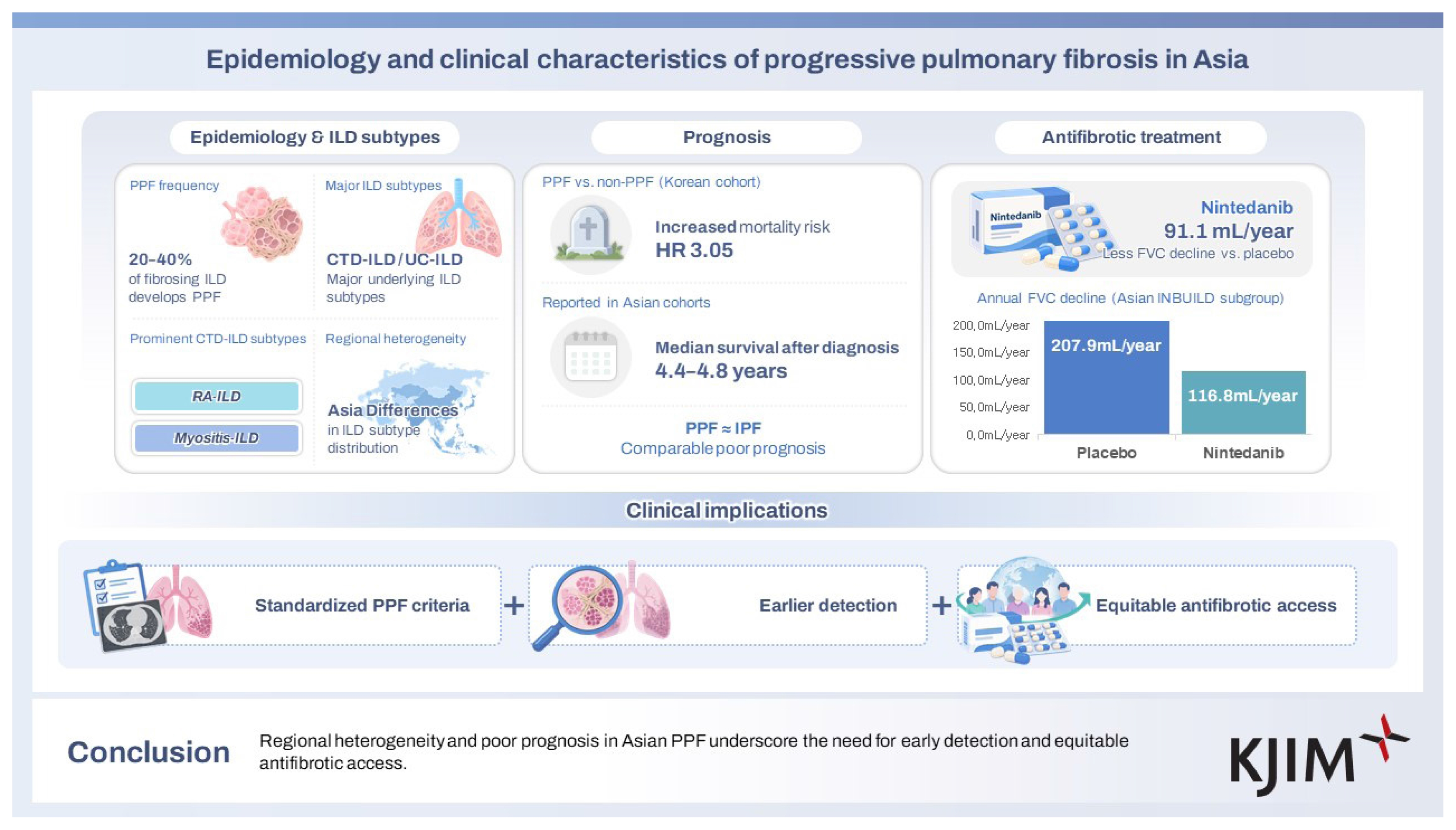
Progressive pulmonary fibrosis (PPF) represents a progressive phenotype across various fibrosing interstitial lung diseases (ILDs). The epidemiology of PPF is confounded by differences in the defining criteria for PPF, data capture sources, as well as the heterogeneity of ILD subtype diagnoses. In Asian PPF cohorts, although some heterogeneity exists across countries, connective tissue disease (CTD)–associated ILD is the most frequently identified underlying cause of PPF. Within CTD-ILD, rheumatoid arthritis–associated ILD and myositis-related ILD account for a particularly large proportion of patients who develop PPF. From a prognostic standpoint, PPF is consistently associated with high mortality, similar to that of idiopathic pulmonary fibrosis. Although randomized trials have demonstrated the efficacy of antifibrotic therapy in PPF, real-world use remains inconsistent because of differences in regulatory approval, reimbursement, and clinical practice. These observations underscore critical gaps in data comparability and treatment access. This narrative review synthesizes contemporary data from Asian PPF cohorts to delineate the epidemiology, clinical features, regional heterogeneity, treatment patterns, and prognosis of PPF.
INTRODUCTION
Progressive pulmonary fibrosis (PPF) is a clinical phenotype across diverse fibrosing interstitial lung diseases (ILDs) that progress despite appropriate management of the underlying etiology [1–3]. The pathobiology of PPF is believed to be similar to that of idiopathic pulmonary fibrosis (IPF), fundamentally associated with epithelial cell injury and impaired wound healing, leading to inexorable fibrosis [3,4]. Several criteria for PPF have been proposed, with the INBUILD criteria and the 2022 American Thoracic Society/European Respiratory Society/Japanese Respiratory Society/Latin American Thoracic Association (ATS/ERS/JRS/ALAT) guideline being the most widely used [3,5]. However, the fundamental criteria for defining PPF are similar: (1) fibrotic ILD other than IPF; (2) at least two of the following three features occurring within 12–24 months: worsening symptoms, radiologic progression, or physiologic decline; and (3) fibrotic progression despite appropriate management according to the standard of care for ILD and in the absence of an alternative explanation [3,5–7]. PPF is strongly associated with increased morbidity due to respiratory events, greater healthcare utilization, and increased mortality. Survival analyses indicate that the disease behavior and prognosis of PPF are comparable to those of IPF [8,9]. Therefore, identifying individuals at high risk of progression to PPF and targeting them for early intervention before advanced disease develops is one of the clinical priorities. However, data on PPF in Asian populations remain limited. In Asia, differences in the underlying ILD spectrum, as well as environmental and healthcare system–related factors, may result in clinical manifestations of PPF that differ from those observed in Western populations. Therefore, this review aims to synthesize data from Asian countries to characterize the epidemiology, clinical features, regional heterogeneity, treatment patterns, and prognosis of PPF, while highlighting unmet needs and future research directions to improve clinical practice in this field.
CHALLENGES IN STUDYING PPF EPIDEMIOLOGY
Studies investigating the epidemiology of PPF are generally challenging and labor-intensive, with their accuracy and standardization limited by the following factors: (i) variability in the PPF criteria used, (ii) data capture sources, and (iii) the heterogeneous nature of ILD subtypes.
Variability in PPF criteria
Across published studies, definitions of disease progression vary substantially depending on the criteria applied (Table 1) [3,5,10]. The key differences between the ATS and INBUILD criteria are as follows: (i) the ATS criteria incorporate diffusing capacity of the lung for carbon monoxide (DLCO), whereas the INBUILD criteria do not [3,5]. (ii) The INBUILD criteria use relative rather than absolute forced vital capacity (FVC) decline. The absolute percentage decline used in the ATS criteria is easy to calculate but may be challenging to interpret consistently when patients are referred from different institutions that use different reference values [11]. Nonetheless, both methods have been shown to predict 2-year transplant-free survival with similar accuracy [12]. Additionally, the optimal FVC threshold for defining disease progression remains uncertain, and no clear superiority of either criterion has been established [10]. (iii) The time frame differs between the two criteria. The ATS criteria evaluate disease progression within 1 year, whereas the INBUILD criteria allow assessment of progression over a period of up to 24 months [3,5].

Diagnostic criteria for PPF
Data capture
Claims-based data
Studies based on claims data have the advantage of including large population-based cohorts; however, they lack detailed information on clinical symptoms, radiologic progression, and physiologic parameters [13]. Therefore, disease progression must be inferred indirectly using surrogate indicators, such as diagnostic codes or prescription patterns, rather than standardized criteria [14,15]. The lack of granular clinical information may also explain the relatively high proportion of unclassifiable ILD (UC-ILD) in claims-based cohorts. In the two largest epidemiologic investigations of PPF conducted in South Korea (2011–2018) and Japan (2012–2020), involving 11,347 and 34,960 patients with non-IPF fibrotic ILD, respectively, 50–70% of ILD cases were classified as unclassifiable [14,15]. In contrast, medical record review studies generally report lower proportions of UC-ILD, ranging from 0% to 18.2% (Table 2) [16–19].

Summary of PPF prevalence, major ILD subtypes across Asian studies
Medical record review
Medical record reviews tend to more accurately reflect standard disease definitions than claims-based analyses. However, this method is also limited by smaller sample sizes and referral bias, particularly in tertiary-care settings where specific ILD subtypes may be overrepresented [20]. Only a limited number of centers in Asia have published real-world PPF incidence data using current definitions [16–18].
Registry or database records
Registry and database records use prespecified data collection protocols, making data capture more standardized and accurate. However, this approach also has limitations, including limited availability of information on potential confounders and possible inaccuracies in large-scale data entry by research assistants who may not fully understand the nuances of certain data elements [21].
Heterogeneity of ILD subtype diagnosis
Hypersensitivity pneumonitis (HP)
Although formal diagnostic criteria, such as the ATS/JRS/ ALAT guideline for HP, are available, the diagnosis of HP remains challenging [22]. This is because the diagnosis of HP relies on the integrated interpretation of multiple diagnostic data sources, none of which is definitive when considered in isolation [22]. Therefore, incomplete assessment of antigen exposure, heterogeneity in the extent of diagnostic testing, and variability in multidisciplinary interpretation contribute to intercenter variability in diagnostic classification [22,23]. Fibrotic HP is particularly prone to misdiagnosis as IPF because of overlapping radiologic and histopathologic features [24,25].
Connective tissue disease–related ILD (CTD-ILD)
Although CTD-ILD subtypes, such as rheumatoid arthritis (RA)-ILD and systemic sclerosis (SSc)-ILD, are generally well defined, considerable diagnostic ambiguity remains in patients with overlap syndromes or those who exhibit autoimmune features but do not meet the diagnostic criteria for a specific CTD [26]. Across institutions, these patients may be variably classified as undifferentiated CTD-ILD, idiopathic interstitial pneumonia (IIP), or interstitial pneumonia with autoimmune features (IPAF), depending on rheumatologic expertise, serologic testing practices, and local multidisciplinary discussion consensus [27–29]. Such variability introduces substantial bias when comparing PPF rates across cohorts because the size and composition of CTD-ILD cohorts differ widely, and individual CTD-ILD subtypes may themselves exhibit different propensities for disease progression.
UC-ILD
UC-ILD represents one of the most heterogeneous ILD categories. The proportion of UC-ILD varies considerably across countries and centers, reflecting differences in the availability and interpretation of diagnostic information, including access to histopathology and radiologic expertise [30,31]. As highlighted in the review by Ryerson et al. [31], the UC-ILD category encompasses diverse disease patterns and clinical behaviors, making comparisons across studies difficult.
EPIDEMIOLOGY AND CLINICAL CHARACTERISTICS OF PPF
Most studies have not reported the epidemiology of PPF in terms of incidence and prevalence but instead have expressed it as the proportion of patients with fibrosing ILD in the study population who develop PPF [8,16–18,32–34]. Worldwide, PPF is estimated to occur in approximately 20–40% of patients with fibrosing ILD, with some studies reporting proportions as high as approximately 47%, depending on the study design and duration of follow-up [2,5,35–39]. Asian cohorts have reported similar proportions, typically ranging from 20% to 40% [8,16–18,32–34]. Table 2 summarizes the available data on PPF from different Asian centers.
Across Asian cohorts, patients with PPF typically present in the sixth or seventh decade of life [8,15,18,19,34,40–42], which is comparable to findings from Western cohorts. The sex distribution varies according to the underlying ILD subtype, with reported proportions of male patients ranging from 43% to 53% [8,15,18,19,34,40,41]. Cohorts dominated by CTD–associated ILD tend to show a modest female predominance, whereas cohorts with mixed etiologies generally exhibit a balanced sex distribution [8,15,18,19,34,40,41]. Most Asian studies have not systematically evaluated ethnic predisposition because the participating centers generally serve relatively homogeneous populations [8,15,18,19,34,40–42]. However, in multiethnic Singapore, two centers reported a disproportionately high proportion of Indian patients with PPF [43,44]. Patients of Indian ethnicity or from the Indian subcontinent (including Bangladesh, Pakistan, and Sri Lanka) accounted for 27.7% of PPF cases and 18.7% of all fibrosing ILD cases, despite comprising only 9% of Singapore’s population, suggesting a potential ethnic susceptibility to PPF [45].
Smoking history is reported in 15–65% of Asian patients with PPF, a range that is lower than that typically observed in IPF cohorts [18,34,40,42,46]. Baseline pulmonary function is moderately impaired at the time of PPF diagnosis, with mean percent-predicted FVC generally ranging from 55% to 72% and DLCO ranging from 45% to 60% [17–19]. Some Asian studies have reported that impaired baseline lung function is a risk factor for progression to PPF [18,19]. However, a Korean study including 110 patients with CTD-ILD showed that the PPF group had better baseline lung function than the non-PPF group, suggesting that disease progression can also occur in patients with ILD who have relatively preserved lung function [47]. Conversely, patients with severely impaired baseline lung function may have limited remaining pulmonary reserve and, therefore, may be less likely to meet formal progression thresholds, complicating the interpretation of baseline lung function as a predictor of disease progression [47]. Several Asian studies have further reported accelerated lung function decline and poor prognosis within 12–24 months after the documentation of disease progression [33,34].
PREDOMINANT ILD SUBTYPES IN PPF
In Asia, the underlying ILD subtypes contributing to PPF show substantial heterogeneity across countries, potentially influenced by differences in environmental exposures, the prevalence of autoimmune diseases, and diagnostic approaches (Table 2). CTD-ILD (14.3–63.7%) and UC-ILD (up to 75%) are among the most common underlying ILD subtypes in patients with PPF across multiple Asian cohorts, although their relative distributions vary by region [14,16,18,19,41,48]. In contrast, the European PERSEIDS study, which included cohorts from six European countries, reported sarcoidosis (25.6–52.6% across countries) as the most frequent non-IPF fibrosing ILD subtype and HP as the condition most likely to exhibit a progressive fibrosing phenotype [49]. Additionally, a clinical cohort from the United Kingdom showed that HP (33.2%) was the most frequent PPF-associated ILD subtype, followed by UC-ILD (17.3%) and CTD-ILD (16.6%) [50]. These contrasting patterns highlight substantial geographic and ethnic variation in the ILD subtypes that progress to PPF.
South Korea
In a single-center Korean cohort of 396 patients with non-IPF fibrosing ILD, in which the INBUILD criteria were used, CTD-ILD accounted for the largest proportion of PPF cases (63.7%), followed by fibrotic HP (21.5%) and idiopathic nonspecific interstitial pneumonia (iNSIP) (14.8%) [18]. However, the study was limited by the exclusion of UC-ILD during data collection [18]. In contrast, nationwide claimsbased analyses showed a somewhat different pattern: CTD-ILD accounted for 46.7% of PPF cases, whereas UC-ILD constituted the largest proportion (50.1%), and HP was markedly underrepresented (1.1%) [14].
China
Multiple Chinese cohorts have identified CTD-ILD as the predominant underlying ILD subtype in PPF. In a single-center study by Fan et al. [19] including 307 patients with non-IPF fibrosing ILD, CTD-ILD accounted for 44.1% of PPF cases, followed by iNSIP (18.6%) and fibrotic HP (11.9%). Similarly, Cen et al. [16] reported CTD-ILD (n = 51, 55.4%) as the most common subtype in their PPF cohort (n = 92) among 177 patients with non-IPF fibrosing ILD, followed by IPAF (n = 13, 14.1%) and iNSIP (n = 9, 9.8%), whereas fibrotic HP accounted for only 1.1% (n = 1).
Japan
Japanese cohorts consistently demonstrate a predominance of UC-ILD among patients with PPF [8,15]. In a nationwide claims-based Japanese study of 34,960 patients with non-IPF fibrosing ILD, UC-ILD (75.2%) constituted the majority of PPF cases (n = 14,580), followed by CTD-ILD (14.3%) and HP (0.3%) [15]. This markedly high proportion of UC-ILD should be interpreted with caution because of the inherent limitations of claims-based data in classifying underlying ILD subtypes. In the single-center study by Takei et al. [8], UC-ILD (47.3%) was also the most common subtype among 119 patients with PPF, followed by CTD-ILD (40.3%), whereas HP accounted for 6.7%, consistently reflecting its low prevalence.
India
In an Indian tertiary-care cohort of 165 patients with non-IPF fibrosing ILD, IIP (30.3%) was the most frequent underlying diagnosis among PPF cases (n = 33), followed by HP (24.2%) and CTD-ILD (24.2%) [51].
ILD SUBTYPES LEADING TO PPF
CTD-ILD
CTD-ILD is a major contributor to PPF in Asia. Across Asian cohorts, CTD-ILD accounts for approximately 40–55% of PPF cases, with progression rates typically ranging from 30% to 45% [8,14,18,19,32,48]. However, among patients with CTD-ILD who progress to PPF, the distribution of the underlying CTD subtypes shows considerable heterogeneity across regions and cohorts in Asia. As shown in Figure 1, RA-ILD constitutes the largest proportion of CTD-ILD cases, ranging from 30% to 60% [18,32,44]. This pattern is particularly evident in Korean cohorts, where RA-ILD accounts for 67% of CTD-ILD–related PPF cases [18]. In contrast, Japanese cohorts demonstrate a relatively lower proportion of RA-ILD, ranging from 11% to 37%, with a more even distribution across CTD-ILD subtypes [15,52].
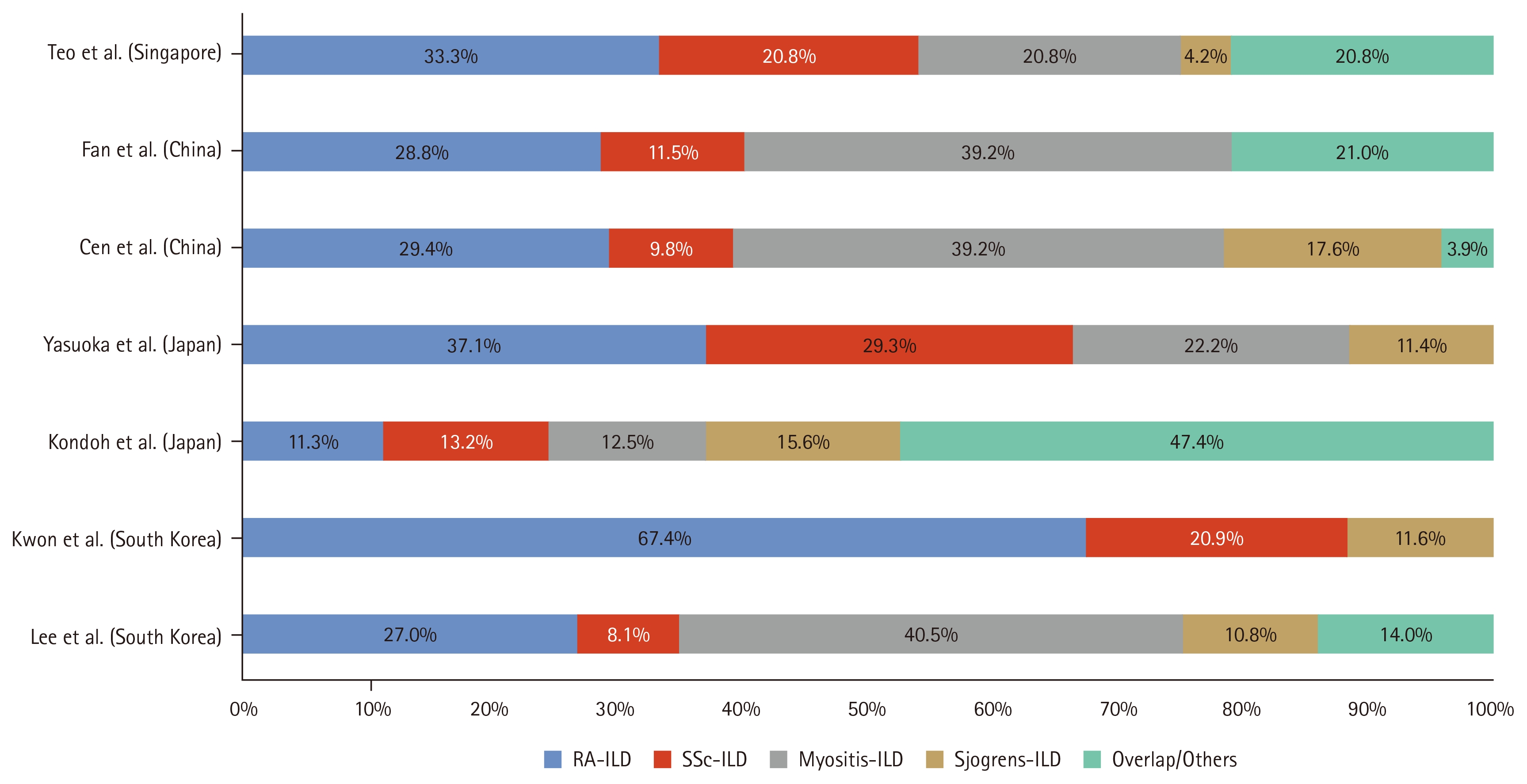
Distribution of underlying CTD subtypes across Asian PPF studies. CTD, connective tissue disease; PPF, progressive pulmonary fibrosis; ILD, interstitial lung disease; RA, rheumatoid arthritis; SSc, systemic sclerosis.
In addition, studies from China, Singapore, and South Korea have reported that myositis-associated ILD accounts for 20–40% of CTD-ILD cases that progress to PPF, indicating a relatively greater contribution in certain Asian populations [19,32,34,44]. This pattern contrasts with findings from Western population-based epidemiologic studies [38,53,54]. In cohorts from the United States and Greece reported by Coultas et al. [53] and Karakatsani et al. [54], myositis-associated ILD accounted for only approximately 0.7–0.8% of all fibrosing ILDs, of which approximately 16% developed a PPF phenotype [38,53,54]. This proportion is lower than those observed for RA-ILD (40%) and SSc-ILD (32%) [38,53,54]. The prevalence of myositis-associated ILD was estimated to be approximately 0.01 per 100,000 people, underscoring its very limited contribution as an underlying cause of PPF in Western populations [38,53,54].
HP
In Asia, the proportion of HP within PPF cohorts has been reported to vary widely across countries and centers, ranging from 0.3% to 34.8% [8,14,18,19,32,48]. Nevertheless, fibrotic HP has consistently been associated with a high risk of progression to PPF. In a Korean single-center cohort, half of the patients with fibrotic HP progressed to PPF [18], and Chinese cohorts reported a progressive fibrosing phenotype in approximately 40% of patients with fibrotic HP [19]. Similarly, a Japanese cohort study reported that 34.8% of patients with fibrotic HP developed a progressive fibrosing phenotype [8]. These findings are consistent with global data demonstrating a high risk of progression to PPF in patients with fibrotic HP [3,38,49]. Collectively, these findings suggest that although the prevalence of HP varies substantially across Asian cohorts, fibrotic HP consistently carries a high risk of progression to PPF.
UC-ILD
Several studies have reported that, along with fibrotic HP and CTD-ILD, UC-ILD is one of the ILD subtypes most prone to developing a progressive fibrosing phenotype [3,55]. In a European real-world PPF cohort, UC-ILD accounted for approximately 20% of all PPF diagnoses, highlighting its substantial contribution to the overall burden of progressive fibrosing disease [56]. In Asia, UC-ILD also represents a substantial proportion of PPF cases. In a nationwide epidemiologic study from South Korea, UC-ILD comprised approximately 50% of PPF cases in 2018. Similarly, in a Japanese claims-based analysis, the 24-month cumulative incidence of disease progression was approximately 40% among patients with UC-ILD [14,15].
iNSIP
Although iNSIP appears to account for a lower overall proportion of PPF cohorts and has a lower progression rate than CTD-ILD or fibrotic HP, it remains a clinically relevant contributor to PPF [3,8,18,38,57]. Kwon et al. [18] reported that 26.3% of patients with iNSIP (n = 76) progressed to PPF in a Korean single-center study. Similarly, a Japanese single-center cohort study showed that 15.0% of patients with iNSIP (n = 20) developed a progressive fibrosing phenotype [8]. iNSIP is often reported within broader categories, such as IIP or “other” ILD subtypes, rather than being analyzed as a distinct subtype, which limits direct comparisons across studies. In some Western cohorts, reported progression rates have ranged from 32% to 41% [38,57].
SURVIVAL OUTCOMES OF PPF
Progression to PPF in patients with fibrosing ILD shows considerable heterogeneity according to the underlying ILD subtype [3]. However, once progression occurs, the clinical course is consistently characterized by poor outcomes [2]. An international survey of ILD specialists estimated that 18–32% of patients with non-IPF ILDs develop a progressive fibrosing phenotype, with the interval from ILD symptom onset to the development of progressive fibrosis ranging from 21 to 27 months and the subsequent interval from disease progression to death ranging from 39 to 57 months [35].
PPF in Asia is consistently associated with high mortality rates across countries, with prognostic outcomes comparable to those of IPF [8,14,16,18]. A Japanese study by Takei et al. [8], including 397 patients with IPF and 447 patients with non-IPF fibrosing ILD, found that the development of PPF was independently associated with worse transplant-free survival (adjusted hazard ratio [HR], 3.36; 95% confidence interval [CI], 2.68–4.23). The median survival after the onset of PPF generally ranged from approximately three to five years, closely resembling that observed in IPF [8]. In Korea, PPF defined according to the INBUILD criteria was associated with a threefold higher risk of mortality than non-progressive disease (HR, 3.05; 95% CI, 2.07–4.51) [18]. Nationwide claims-based data showed that the annual mortality rates of PPF were consistently higher than those of IPF throughout the observation period. Annual mortality rates ranged from 11.5% to 14.3% for PPF, compared with 10.2% to 10.9% for IPF [14]. In China, a single-center retrospective cohort study including 633 patients with fibrotic ILD demonstrated that the survival of patients with PPF was significantly reduced and statistically indistinguishable from that of patients with IPF after the diagnosis of PPF (p = 0.426) [16]. The similarly poor prognosis observed in PPF and IPF may be explained by several factors. First, once progressive fibrosis develops despite appropriate management, the clinical behavior of non-IPF fibrosing ILDs appears to converge toward an IPF-like phenotype characterized by irreversible fibrosis, accelerated lung function decline, and early mortality [58,59]. Second, because PPF is defined after documented disease progression, this designation may preferentially identify patients with more advanced disease, which may partly contribute to the poor outcomes observed [16]. Additionally, the prognosis of PPF may vary according to the underlying ILD subtype. A previous study reported that transplant-free survival in patients with fibrotic HP and non-IPF IIP who met the PPF criteria was comparable to that of patients with IPF, whereas CTD-ILD was associated with a more favorable prognosis [10]. However, these findings have not been adequately evaluated in Asian cohorts, and further validation is warranted.
Although direct comparisons of survival outcomes between Asian and Western PPF cohorts have not yet been reported, the median survival time after disease progression in Western PPF cohorts has been reported to be approximately 2.9–3.8 years, which closely overlaps with that observed in IPF [37,60–62]. In Asian cohorts, the median survival after diagnosis has been reported to range from approximately 4.4 to 4.8 years, which is slightly longer than that reported in Western cohorts [8,16]. However, this apparent difference may be confounded by lead-time bias resulting from differences in disease stage at the time of referral to ILD centers. Additionally, because these estimates are derived from studies using different PPF definitions and assessment windows, direct quantitative comparisons between regions should be interpreted with caution.
TREATMENT OF PPF
Although the initial treatment of non-IPF fibrosing ILDs may vary according to the underlying disease and may include corticosteroids or immunosuppressive agents when appropriate, treatment strategies should be reconsidered once a progressive fibrosing phenotype becomes established [1,3,63]. Given that PPF represents a common phenotype of progressive fibrosis across different ILDs, antifibrotic therapy should be considered as an add-on treatment when fibrotic progression persists despite appropriate disease-specific management [1,3,63].
Following the publication of randomized controlled trials demonstrating the efficacy of antifibrotic agents in PPF, antifibrotic therapy has assumed an increasingly important role in PPF management [5,7]. In the Asian subgroup of the INBUILD trial, nintedanib reduced the 52-week decline in FVC by 91 mL/year compared with placebo (−116.8 vs. −207.9 mL/year; p = 0.03) and was considered to have a manageable safety profile [64]. Compared with the overall INBUILD population, in which nintedanib reduced the annual decline in FVC by 107 mL/year, these findings indicate that the treatment effect of nintedanib on lung function decline was consistent in Asian patients [64,65]. Additionally, the reduction in the risk of acute exacerbation or death appeared to be more pronounced in Asian patients. In the Asian subgroup, nintedanib was associated with a 76% reduction in the risk of acute exacerbation or death (HR, 0.24; 95% CI, 0.09–0.64), compared with a more modest effect in the overall population (HR, 0.66; 95% CI, 0.53–0.83) [64,65]. Compared with nintedanib, evidence supporting pirfenidone in PPF remains more limited. Although the phase 2b RELIEF trial and a phase 2 trial in patients with unclassifiable progressive fibrosing ILD suggested a potential benefit in slowing lung function decline, the lack of sufficient evidence from prospective randomized controlled trials evaluating pirfenidone in PPF remains a limitation when informing treatment decisions [6,7].
Despite these demonstrated therapeutic benefits, the real-world implementation of antifibrotic therapy across Asia remains limited and highly heterogeneous, largely because of jurisdictional differences in regulatory approvals, reimbursement policies, and prevailing clinical practice patterns [66]. From a regulatory standpoint, antifibrotic agents have been approved for the treatment of both PPF and IPF in many Asian countries; however, in the Philippines, approval is limited to IPF [66]. Regarding reimbursement, nintedanib is currently the only antifibrotic agent eligible for PPF coverage in Thailand, Hong Kong, and South Korea, whereas in many Asian regions, substantial out-of-pocket costs continue to limit the use of antifibrotic therapy [66].
Within this heterogeneous landscape, country-specific real-world data provide valuable insights into current clinical practice; however, such data remain limited in Asia. In Japan, nintedanib is reimbursed under the national health insurance system for the treatment of PPF [66]. Together with the national intractable disease support program (Nan-byo system), this framework ensures sustained access to antifibrotic therapy for patients with PPF [66]. Among patients with PPF who were prescribed nintedanib, approximately half were not receiving concomitant glucocorticoids or immunosuppressive agents at the time of antifibrotic therapy initiation [42]. This pattern was particularly pronounced among patients with IIP, approximately 65% of whom initiated nintedanib without immunomodulatory therapy during the 6 months preceding antifibrotic treatment [42]. In contrast, a real-world observational study of patients with PPF treated with nintedanib in the United Kingdom reported that 90% of patients were receiving concurrent immunosuppressive therapy, suggesting that nintedanib monotherapy may be used more frequently in Japan than in the United Kingdom [42,67].
Although nationwide claims-based studies in South Korea have characterized the burden and outcomes of PPF, antifibrotic utilization specifically among patients with PPF has not been directly quantified [14]. Following the introduction of reimbursement for nintedanib for PPF in May 2025, the real-world use of nintedanib among Korean patients with PPF is expected to increase progressively [68]. Although pirfenidone is not approved for the treatment of PPF, a recent retrospective single-center study from South Korea involving 33 patients with PPF reported significant improvement in lung function (FVC % predicted, from −3.79% to +3.27% at 6 months; p = 0.001) with a manageable safety profile during off-label pirfenidone treatment, suggesting a potential therapeutic role for pirfenidone in PPF [68].
Considering these findings, although robust evidence supports the efficacy of antifibrotic therapy in PPF, reports on its real-world implementation across Asia remain limited. The harmonized application of standardized PPF definitions, together with regulatory and reimbursement policies that promote equitable access to antifibrotic therapy, is essential for translating clinical trial evidence into routine clinical practice. In addition, given the potential clinical benefits of antifibrotic therapy, strategies are needed to identify progressive fibrosing behavior earlier in the disease course, before overt physiologic deterioration becomes apparent, thereby enabling timely therapeutic intervention. Future research should therefore focus on the development of early diagnostic and prognostic biomarkers that may facilitate appropriate risk stratification and timely treatment in patients with fibrotic ILD. In this context, health screening and computed tomography-based detection of interstitial lung abnormalities (ILA) may provide an opportunity to identify progressive fibrosing behavior earlier in the course of ILD [69,70]. Ongoing investigations of antifibrotic therapy in patients with ILA, including the phase III trial of nerandomilast in individuals with ILA and a family history of pulmonary fibrosis, may further clarify whether earlier detection and intervention can improve clinical outcomes [71].
CONCLUSIONS
Across Asia, PPF is observed across a wide spectrum of non-IPF fibrosing ILDs, with substantial heterogeneity in epidemiologic characteristics and disease composition across countries and cohorts. These differences are largely attributable to variability in PPF definitions and methodological differences related to data sources. PPF is consistently associated with increased mortality, with outcomes comparable to those of IPF. Although randomized clinical trials have demonstrated the efficacy of antifibrotic therapy for PPF, its real-world implementation across Asia remains limited because of differences in regulatory approval and reimbursement policies. Therefore, there is a need for the consistent application of standardized PPF criteria, the establishment of multinational prospective data frameworks, and policies that promote equitable access to antifibrotic therapy. Furthermore, early diagnostic and prognostic biomarkers are needed to identify patients at risk of disease progression.
Notes
CRedit authorship contributions
Ju Hyun Oh: conceptualization, methodology, writing - original draft, writing - review & editing, visualization; Felicia S. W. Teo: conceptualization, methodology, writing - original draft, writing - review & editing, supervision; Hee-Young Yoon: conceptualization, writing - review & editing, supervision; Jin Woo Song: conceptualization, methodology, writing - original draft, writing - review & editing, supervision, funding acquisition
Conflicts of interest
The authors disclose no conflicts.
Funding
This work was supported by grants from the Bio and Medical Technology Development Program (NRF-2022M3A9E4082647) of the National Research Foundation of Korea (NRF), funded by the Ministry of Science and ICT, South Korea. This work was also supported by the National Institute of Health research project (2024ER090500) and by the Korea Environment Industry and Technology Institute through the Core Technology Development Project for Environmental Diseases Prevention and Management Program, funded by the Ministry of Environment, South Korea (RS-2022-KE002197).